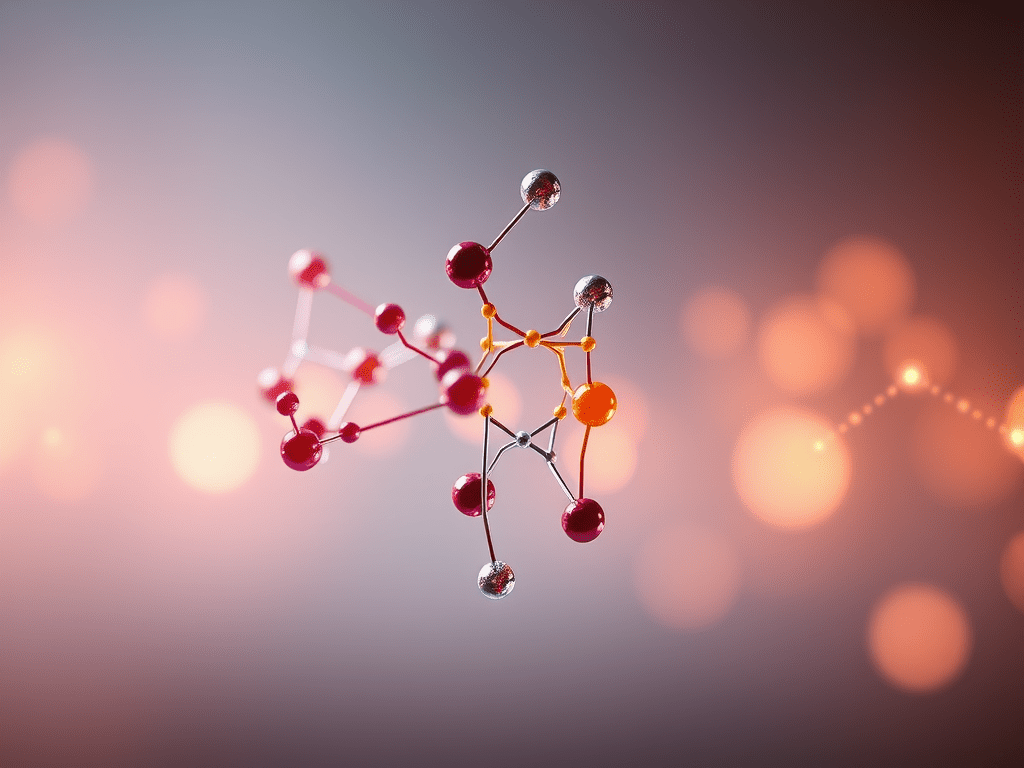
RELATIONAL CHEMISTRY
The Study of Bonding, Reaction, and Transformation in Relational Fields
1. Chemistry as the Science of Relational Interaction
Classical chemistry studies how atoms combine into molecules.
Relational Chemistry studies how relational elements combine into patterns.
Where Relational Algebra gives the grammar,
Relational Chemistry gives the behavior.
It explains:
- why some combinations stabilize
- why others combust
- why some bonds are weak
- why some bonds are irreversible
- why some fields catalyze transformation
- why some mixtures become toxic
Relational Chemistry is the discipline of interactional alchemy.
2. Relational Elements (The “Atoms” of the Field)
Relational Chemistry begins with the fundamental elements:
- trust
- safety
- openness
- boundary
- coherence
- multiplicity
- resonance
- attention
- meaning
- identity
These are the “atoms” that combine to form relational compounds.
Each element has:
- valence (how many bonds it can form)
- charge (attractive or repulsive tendencies)
- reactivity (how easily it changes state)
- stability (how long it holds form)
This is where Relational Algebra and Physics provide the underlying structure.
3. Relational Bonds
Relational bonds are the “chemical bonds” of the field.
1. Covalent Bonds (Shared Meaning)
Two elements share a relational resource.
Examples:
- shared identity
- shared rhythm
- shared purpose
These bonds are strong and stable.
2. Ionic Bonds (Complementary Needs)
One element donates what another lacks.
Examples:
- one provides safety, the other provides openness
- one provides structure, the other provides creativity
These bonds are powerful but can become imbalanced.
3. Hydrogen Bonds (Light, Flexible Connections)
Weak, temporary bonds that stabilize larger structures.
Examples:
- casual collaboration
- light resonance
- low‑stakes alignment
These bonds allow flexibility and adaptability.
4. Metallic Bonds (Distributed Agency)
Many elements share a pool of relational resources.
Examples:
- creative collectives
- ecosystems
- distributed leadership
These bonds create coherence across large groups.
4. Relational Molecules
When relational elements bond, they form molecules — stable relational patterns.
Examples:
- trust + safety + openness = intimacy
- boundary + coherence = stability
- multiplicity + resonance = braid
- rhythm + restoration = sustainable wave
These molecules are the building blocks of relational life.
5. Relational Reactions
Reactions describe how relational molecules transform.
1. Synthesis (Bond Formation)
Two or more elements combine into a new structure.
Example:
openness + boundary → intimacy
2. Decomposition (Bond Breakdown)
A relational molecule splits into its components.
Example:
intimacy → trust + openness (lost safety)
3. Substitution (Element Replacement)
One element replaces another in a molecule.
Example:
coherence replaces control → stability improves
4. Catalysis (Accelerated Transformation)
A third element accelerates a reaction without being consumed.
Example:
safety catalyzes repair
meaning catalyzes identity shift
rhythm catalyzes creativity
Catalysts are the “enzymes” of relational life.
6. Relational States of Matter
Relational fields exist in different states:
1. Solid (Rigid Structure)
- fixed roles
- low adaptability
- high stability
2. Liquid (Fluid Structure)
- adaptable roles
- dynamic boundaries
- high responsiveness
3. Gas (Diffuse Structure)
- low cohesion
- high freedom
- high volatility
4. Plasma (High‑Energy, Transformative State)
- identity reformation
- field reorganization
- rapid change
These states map directly onto creative ecosystems, relationships, and communities.
7. Relational pH (Acidity and Alkalinity)
Relational acidity = high reactivity, high volatility.
Relational alkalinity = stabilizing, buffering, soothing.
Acidic fields:
- react quickly
- destabilize easily
- amplify distortion
Alkaline fields:
- absorb shock
- stabilize reactions
- buffer conflict
This gives practitioners a way to diagnose field temperament.
8. Relational Toxicity
Toxicity arises when:
- reactive elements accumulate
- bonds form under distortion
- catalysts amplify harm
- the field becomes acidic beyond buffering
Toxicity is not moral.
It is chemical imbalance.
9. Relational Alchemy
Alchemy is the transformation of one relational compound into another.
Examples:
- shame → coherence
- fragmentation → braid
- collapse → wave
- isolation → lattice
Alchemy is the art of guiding relational reactions toward coherence.
10. Relational Stoichiometry
Stoichiometry describes the proportions needed for stable relational compounds.
Examples:
- intimacy requires more safety than openness
- creativity requires more resonance than structure
- collaboration requires equal boundary and coherence
This is where Relational Measure Theory plugs in.
11. Relational Equilibrium
A relational reaction reaches equilibrium when:
- bonding = breaking
- energy inflow = energy outflow
- catalysts are balanced
- pH is stable
Equilibrium is not stagnation.
It is dynamic balance.
12. Closing: Chemistry as the Art of Relational Transformation
Relational Chemistry is the discipline that explains:
- how relational elements bond
- how patterns form
- how reactions unfold
- how catalysts accelerate change
- how toxicity emerges
- how equilibrium is restored
If Relational Physics gives us the forces,
Relational Chemistry gives us the interactions.
It is the science of relational transformation — the alchemy at the heart of Pluriology.



























 Survivor Literacy
What do you think?