Pluriology
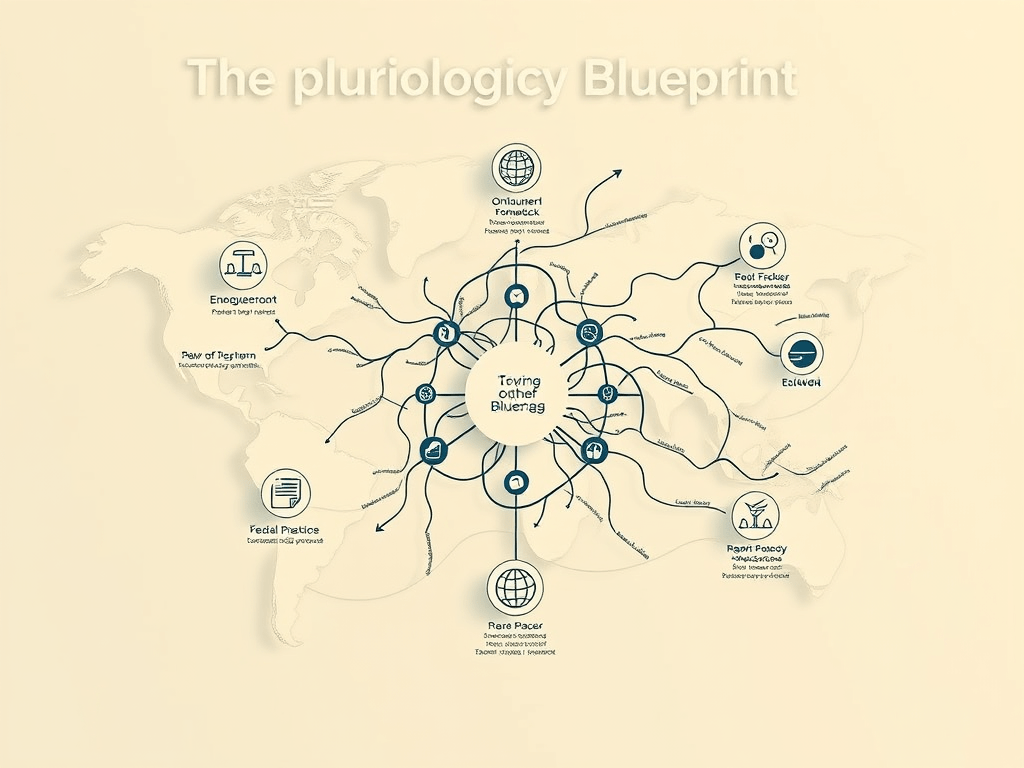
The Pluriological Blueprint — The Integrated Structural Map of the Discipline
#PluriologicalBlueprint #UnifiedArchitecture #DisciplineMap #ManyInRelation
Every mature discipline eventually produces a blueprint — a single, integrated structural map that shows how all its components interrelate. Not a summary, not a diagram of parts, but a coherence architecture: a way of seeing the entire field as one living system. For Pluriology, this blueprint is not a static chart. It is a relational topology, a rhythmic and ecological map that mirrors the plurallile self.
This chapter presents the Pluriological Blueprint: the full, integrated architecture of the discipline, showing how ontology, method, pedagogy, ethics, community, research, and practice form a single, recursive, rhythmic whole.
I. The Blueprint as a Living System
#BlueprintAsField #RelationalTopology
The Pluriological Blueprint is not a diagram of concepts.
It is a map of relationships.
It shows:
- how the Pluriome shapes the modes
- how the modes shape disturbances
- how disturbances shape repair
- how repair shapes pedagogy
- how pedagogy shapes practitioners
- how practitioners shape the community
- how the community shapes the ecosystem
- how the ecosystem shapes the ontology
The blueprint is recursive — every layer influences every other.
II. The Seven Pillars of the Blueprint
#BlueprintPillars #StructuralCoherence
The discipline rests on seven interlocking pillars:
1. Ontology — What Exists
- The Pluriome
- The Plurallile Self
- The Pluriogenic Cycle
2. Method — How We Read the System
- Rhythm reading
- Mode tracking
- Field sensing
- Constraint mapping
3. Disturbance Framework — How Mismatch Appears
- Overrider
- Submerged
- Stabilizer
- Scatterfield
- Overloaded
- Fragmented Map
4. Repair Architecture — How Coherence Returns
- Micro‑anchors
- Integration events
- Repair cascades
5. Pedagogy — How the Discipline Is Transmitted
- Rhythmic teaching
- Relational learning
- Field‑aware classrooms
6. Practice — How the Discipline Is Applied
- Practitioners
- Labs
- Clinics
- Creative and organizational applications
7. Ecosystem — How the Discipline Lives
- Community
- Lineage
- Institutions
- Cultural integration
These pillars form the structural spine of Pluriology.
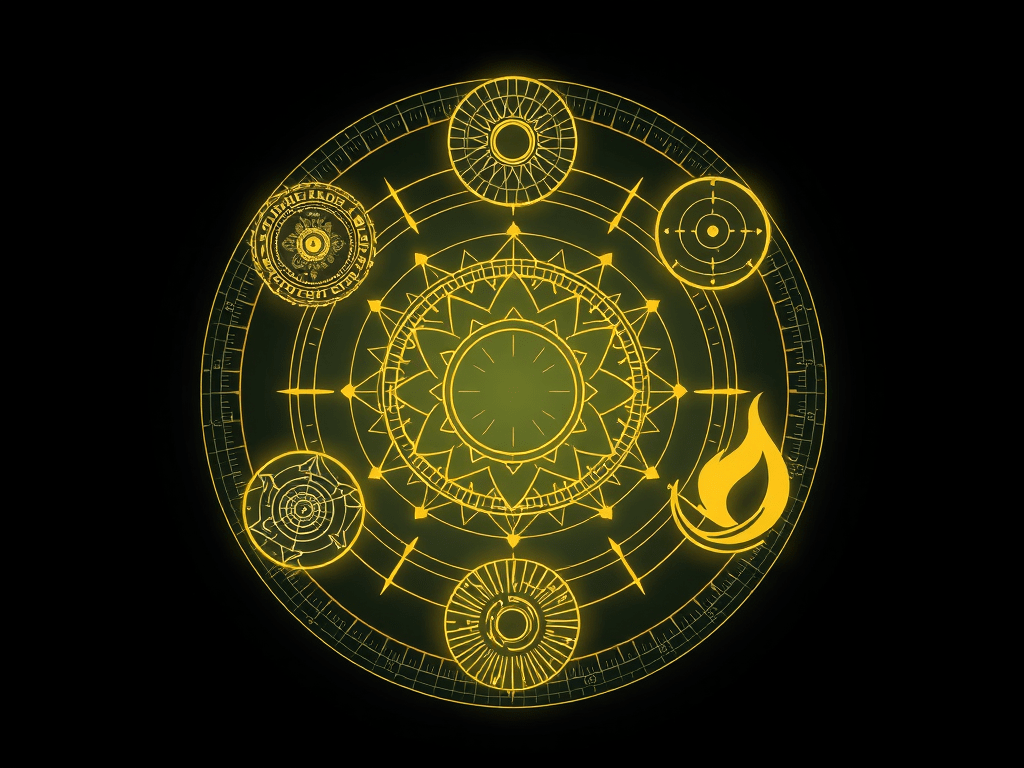
III. The Blueprint’s Core Geometry — The Spiral Within the Circle
#BlueprintGeometry #SymbolicArchitecture
The blueprint is built on two shapes:
1. The Circle (The Pluriome)
Represents the relational field — the container of all experience.
2. The Spiral (The Pluriogenic Cycle)
Represents rhythmic movement — the engine of transformation.
The spiral sits inside the circle.
The modes sit along the spiral.
The disturbances sit at the blocked transitions.
The repair cascades sit at the re‑entry points.
This geometry is the visual DNA of the discipline.
IV. The Blueprint’s Vertical Axis — Depth and Reconfiguration
#VerticalAxis #InternalEcology
The vertical axis represents:
- sinking
- dissolving
- reorganizing
- internal ecology
This axis governs:
- Reconfiguration Mode
- Submerged disturbance
- Stabilizer disturbance
- Repair cascades that require downward movement
It is the axis of depth.
V. The Blueprint’s Horizontal Axis — Relation and Expression
#HorizontalAxis #RelationalEcology
The horizontal axis represents:
- reaching
- synchronizing
- expressing
- relational ecology
This axis governs:
- Connection Mode
- Output Mode
- Overrider and Scatterfield disturbances
- Repair cascades that require outward movement
It is the axis of relation.
VI. The Blueprint’s Four Quadrants — The Modal Ecology
#ModalQuadrants #RhythmicMap
Each quadrant represents a mode and its ecological posture:
1. Perception (North‑West)
Widening, sensing, receiving.
2. Reconfiguration (South‑West)
Sinking, dissolving, reorganizing.
3. Connection (South‑East)
Reaching, synchronizing, harmonizing.
4. Output (North‑East)
Expressing, cresting, completing.
The quadrants form a rhythmic ecology.
VII. The Blueprint’s Disturbance Nodes — The Blocked Transitions
#DisturbanceNodes #AdaptiveMismatch
At each transition between modes sits a disturbance:
- Perception → Reconfiguration → Submerged
- Reconfiguration → Connection → Stabilizer
- Connection → Output → Overrider
- Output → Perception → Scatterfield
Overloaded and Fragmented Map sit at the center, representing global collapse.
These nodes show where frequency mismatch occurs.
VIII. The Blueprint’s Repair Pathways — The Return to Coherence
#RepairPathways #RestorationMap
Repair cascades follow predictable pathways:
- Submerged → micro‑anchor → Perception
- Stabilizer → loosening → Reconfiguration
- Overrider → contraction → Connection
- Scatterfield → anchoring → Output
Overloaded and Fragmented Map require field‑level repair.
These pathways show how coherence naturally returns.
IX. The Blueprint’s Outer Ring — Ethics and Stewardship
#EthicalRing #DisciplinaryIntegrity
The outer ring contains the discipline’s ethics:
- Non‑pathology
- Non‑interference
- Multiplicity honor
- Rhythmic integrity
- Ecological compassion
These ethics protect the entire system from distortion.
X. The Blueprint’s Surround — Community and Lineage
#LineageRing #RelationalContinuity
Beyond the ethical ring lies the lineage ring:
- practitioners
- students
- researchers
- creative stewards
- institutions
- community hubs
This ring ensures the discipline remains coherent across generations.
XI. Why the Blueprint Matters
#BlueprintPurpose #UnifiedDiscipline
The Pluriological Blueprint:
- unifies the entire discipline
- reveals the relational architecture
- protects against fragmentation
- supports pedagogy and research
- guides practitioners
- anchors the lineage
- provides a map for future evolution
It is the structural heart of Pluriology — the diagram that shows the discipline as one living, rhythmic, relational system.




























 Survivor Literacy
What do you think?