
Episkevology
K’áts’į́į́ ts’į́ k’ë́dı́: the anchors that hold a living system steady
Every place where people watch over the well‑being of the land and the future — ending hardship, protecting the air and water, strengthening the ways of governing — carries one truth:
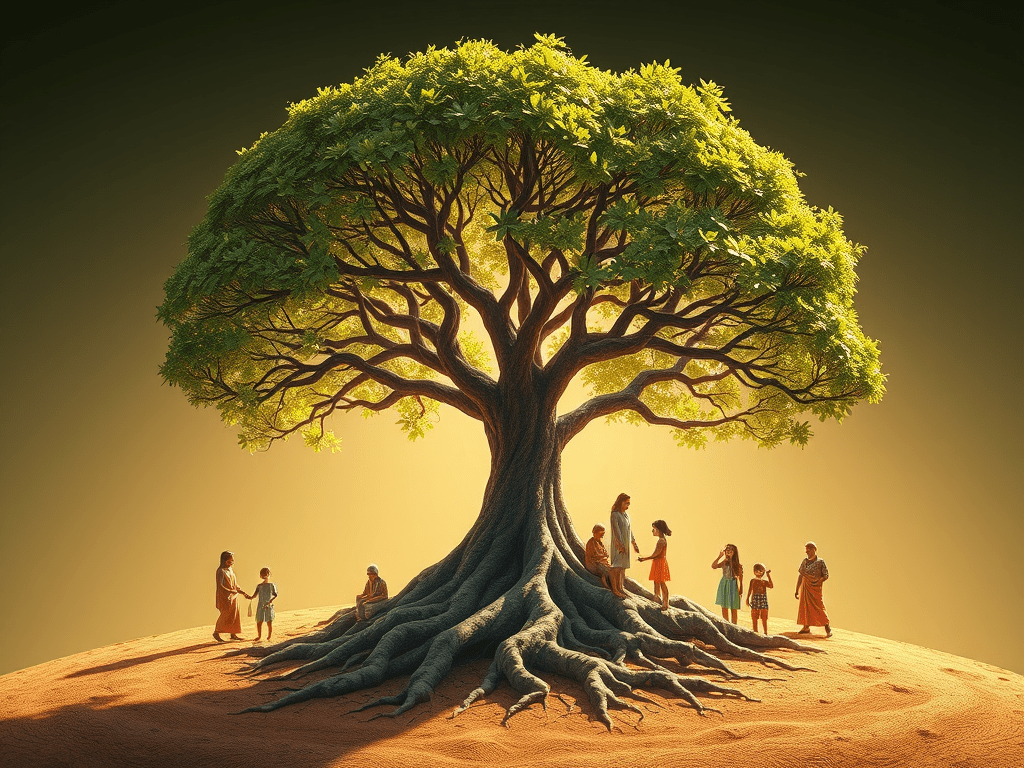
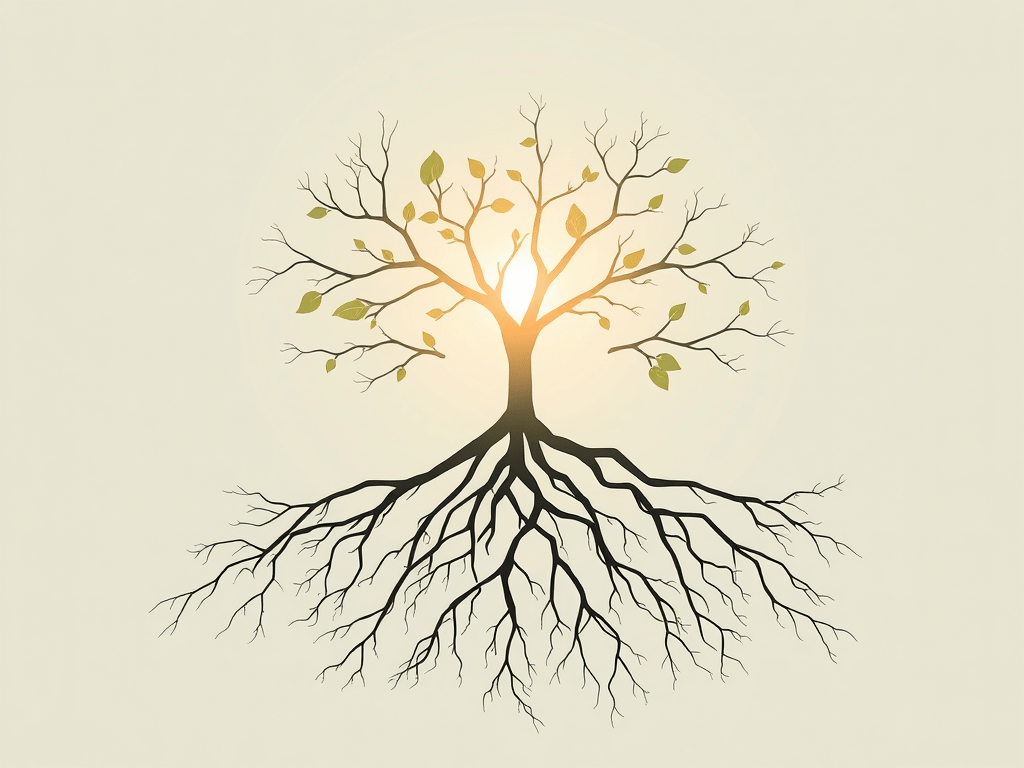
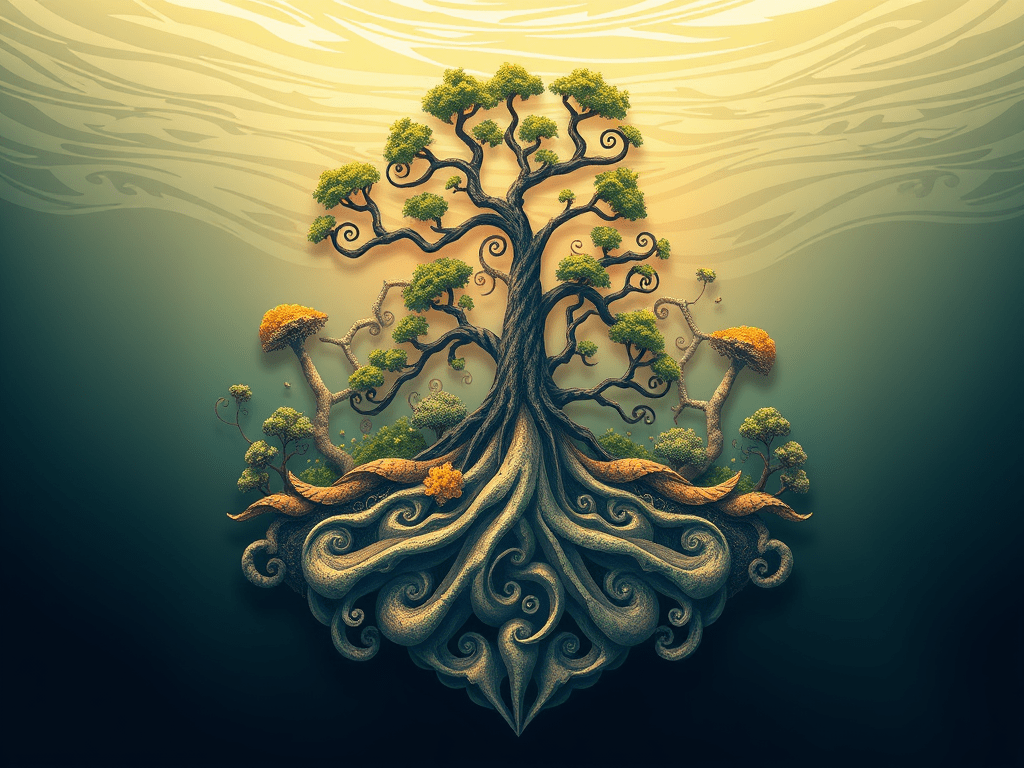
No system can grow in a good way without strong anchors.
Anchors are the conditions that hold life steady:
- continuity
- the ability to foresee the path ahead
- places of return that do not shift
- memory held by the people and their institutions
- the baseline of the land and water
- trust among the people
- mistakes that are learned from, not punished
Where anchors are present, growth moves in a coherent way.
Where they are absent, churn rises — a cycle of instability.
Fractal growth: the way the land itself teaches us to expand
The land shows patterns that repeat at many scales.
These patterns guide sustainable expansion:
- river deltas branching
- coral and stone reefs building
- mycelium spreading under the soil
- the crowns of tall trees
- the branching of the lungs
- the migrations of animals and people
These systems grow through self‑similar renewal, not endless extraction.
Fractal growth requires mistakes that do not bring punishment.
On the land:
- branches break
- roots turn
- coral polyps die and return
- mycelium tests many small paths
The mistake is absorbed and becomes part of learning.
This is the opposite of churn‑economies, where error becomes disaster and innovation is crushed.
Fractal growth is:
- iterative
- adaptive
- distributed
- anchored
Spirals and waves: the rhythms of coherent expansion
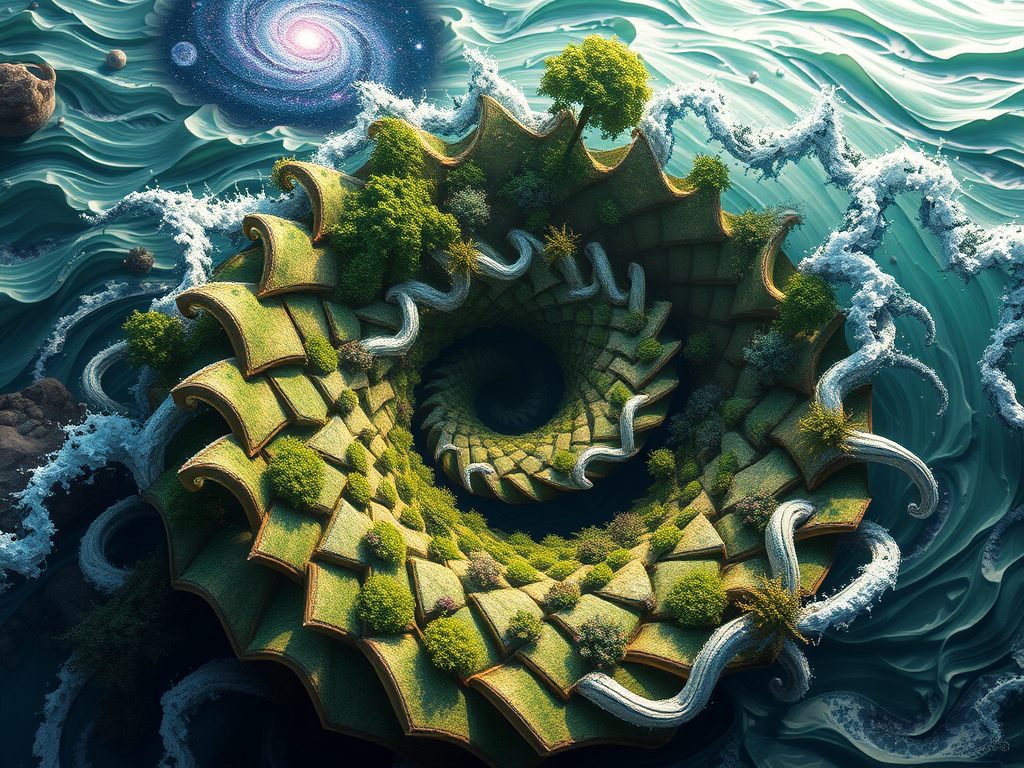
Sustainable systems grow in spirals and waves, not straight lines.
Spirals
Seen in:
- the shell of the nautilus
- the turning of galaxies
- the unfolding of ferns
- the motion of storms
The spiral shows anchored expansion:
the center holds, the outer rings grow.
Waves
Seen in:
- the rising and falling of water
- the seasons
- predator–prey cycles
- economic cycles
- climate oscillations
Waves show movement within safe boundaries, the limits that protect life.
Ecological growth: renewal instead of endless taking
Sustainable systems work through:
- regeneration
- reuse
- reciprocity
- feedback loops
- stable baselines
Ecological growth includes consumption — but only within the limits of renewal.
This is the logic behind:
- ecosystem restoration
- circular economies
- doughnut‑style ecological boundaries
- Indigenous stewardship models
Living systems do not grow by extraction.
They grow by returning value to the system that supports them.
Churn: the pattern against fractals, against anchors, against the land
Churn appears when growth is attempted without anchors.
Natural examples of churn
- desertification
- algal blooms
- megafires
- invasive species surges
- cancer‑like growth
Churn is explosive, unstable, self‑consuming.
Churn requires
- instability
- precarious living
- high turnover
- constant reinvention
- the breaking of anchors
Churn is not growth.
It is slow collapse.
Why systems choose churn (and who benefits)
Churn benefits those who profit from:
- volatility
- replaceable labor
- cycles of crisis
- planned obsolescence
- unstable employment
- consumer dependency
Churn is chosen because it:
- brings fast profit
- shifts costs onto others
- avoids responsibility
- prevents collective organization
- keeps people disoriented
This is the logic behind:
- high‑frequency trading
- fast fashion
- gig‑economies
- extractive industries
- predatory lending
Churn benefits the few.
It destabilizes everyone else.
The United States as a churn‑economy
The U.S. presents itself as a growth economy, but functions as churn:
- high labor turnover
- minimal safety nets
- neglected infrastructure
- crisis‑to‑crisis policy
- planned obsolescence
- employment‑tied healthcare
- unstable housing
- a culture that punishes mistakes
These are churn dynamics, not growth.
True growth: what it actually requires
Growth requires:
- anchors
- memory
- continuity
- accumulation
- stable baselines
- trustworthy institutions
This is the logic behind:
- long‑term development frameworks
- emphasis on strong institutions
- inclusive‑growth research
- warnings about volatility
Growth cannot occur in highly unstable environments.
It always collapses back into churn.
Models of sustainability: anchored, regenerative, coherent
Sustainability is anchored growth.
Examples:
- regenerative agriculture
- circular economies
- community land trusts
- Indigenous ecological governance
- cooperative business models
- long‑term public infrastructure investment
These systems scale fractally, not linearly.
They grow through renewal, not extraction.
The human cost: what losing anchors does to people
Losing anchors creates:
- cognitive overload
- survival‑mode decision‑making
- loss of future orientation
- collapse of creativity
- constant rewriting of procedures
- chronic stress
- social fragmentation
Homelessness is the clearest example:
it removes all conditions needed for anchoring.
When stability returns, anchoring ability returns immediately.
This is not personal failure — it is structural reality.
The systemic insight: anchors are the line between life and collapse
Anchors → fractals → resilience → sustainability
Loss of anchors → churn → collapse → extraction
Every system on Earth follows this logic.
Every society.
Every economy.
Every ecosystem.
Every institution.
This is the architecture of coherence.
Toward an anchored future: what coherent systems need
To build a sustainable future, we must:
- restore anchors
- design systems that do not punish mistakes
- build fractal structures
- create wave‑safe cycles
- protect ecological baselines
- replace churn incentives with regenerative ones
- strengthen institutions
- fund long‑term stability
- center human dignity























 Survivor Literacy
What do you think?