
Relational Field Theory
Why So Much Confusion Comes From Missing the Hidden Axes
Once you start seeing relationships dimensionally, something becomes obvious in hindsight:
most of the confusion, conflict, and emotional pain we experience doesn’t come from what happened.
It comes from not knowing which dimensions were active.
When we don’t know the axes, we default to the simplest possible interpretation — usually a moral one:
- “They don’t care.”
- “I messed up.”
- “They’re avoiding me.”
- “I’m too much.”
- “They’re being dramatic.”
- “I should have known better.”
But these interpretations only feel true because we’re trying to explain a multi‑dimensional event using a single‑dimension story.
The moment you start looking for the hidden axes, everything changes.
Most confusion is dimensional blindness
When something feels “off,” it’s rarely because the situation is mysterious.
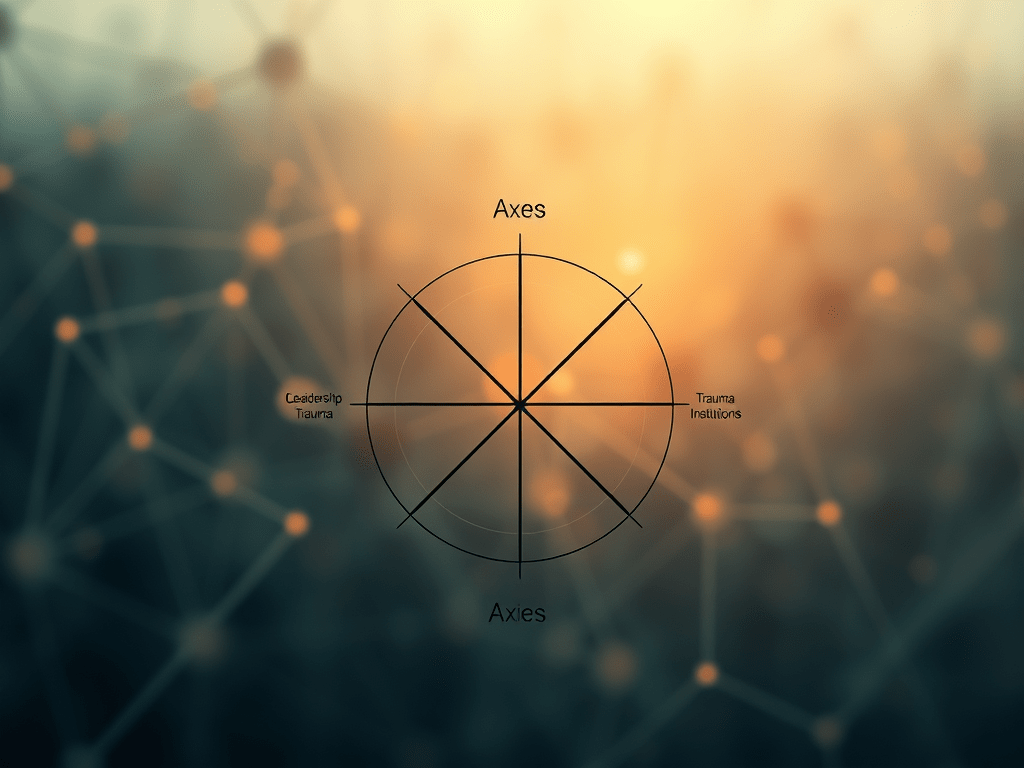
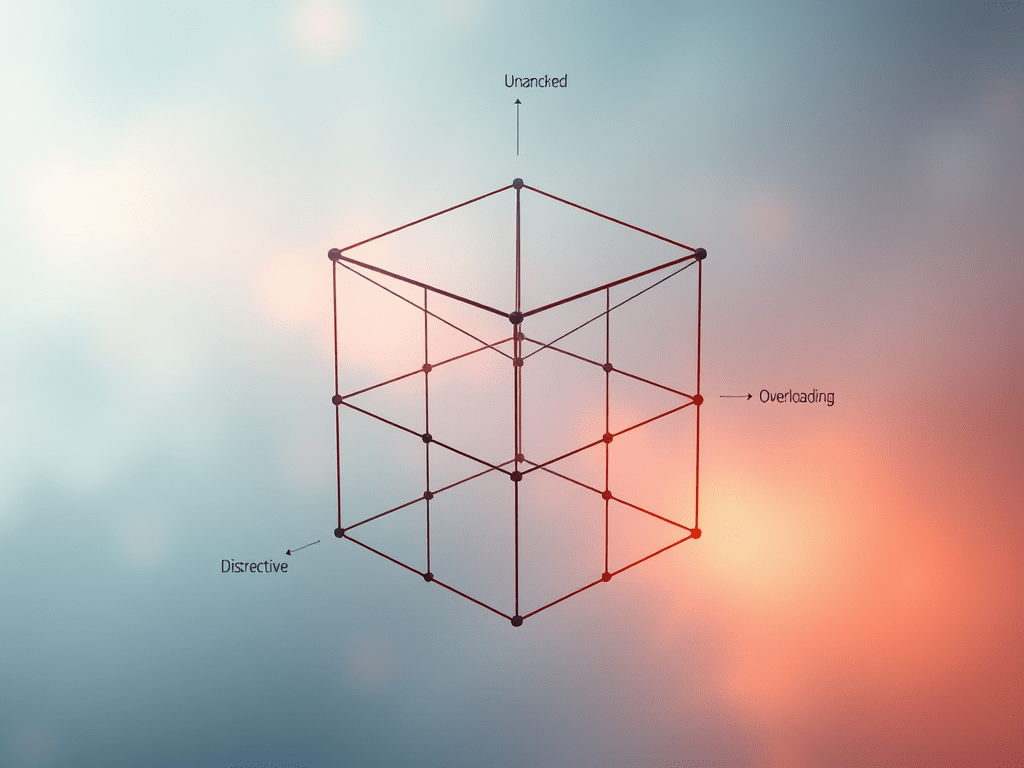
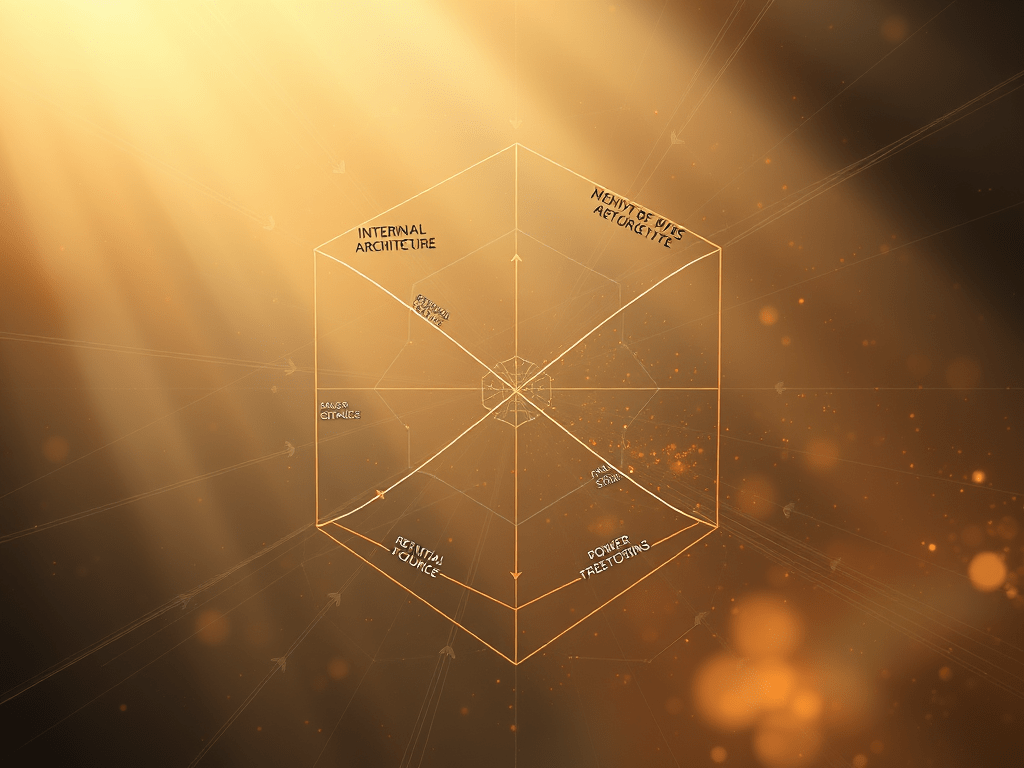
It’s because one or more axes are active beneath the surface:
- Anchoring
- Protection
- Coherence
- Internal architecture
- Bandwidth
- Tempo
- Relational state
If you don’t know the axes exist, you can’t see the structure.
And if you can’t see the structure, you fill the gap with:
- fear
- guilt
- projection
- self‑blame
- over‑responsibility
- misinterpretation
Dimensional blindness is what makes simple moments feel catastrophic.
Hidden axes explain why people behave in ways that seem contradictory
Someone can be:
- warm with you but distant with others
- reliable in one context but overwhelmed in another
- expressive in private but shut down in groups
- generous when anchored but protective when unanchored
- coherent in one field and chaotic in another
Without the axes, this looks inconsistent.
With the axes, it’s predictable.
People aren’t inconsistent.
They’re dimensional.
Hidden axes explain why conversations misfire
A conversation can go sideways even when both people have good intentions.
Why?
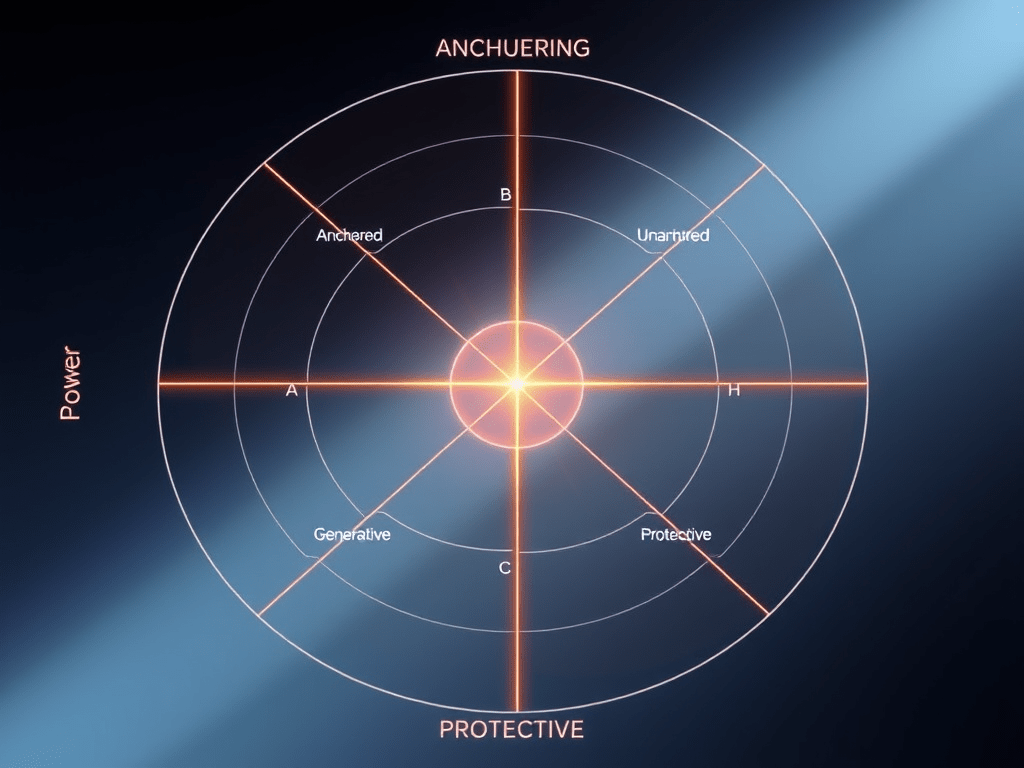
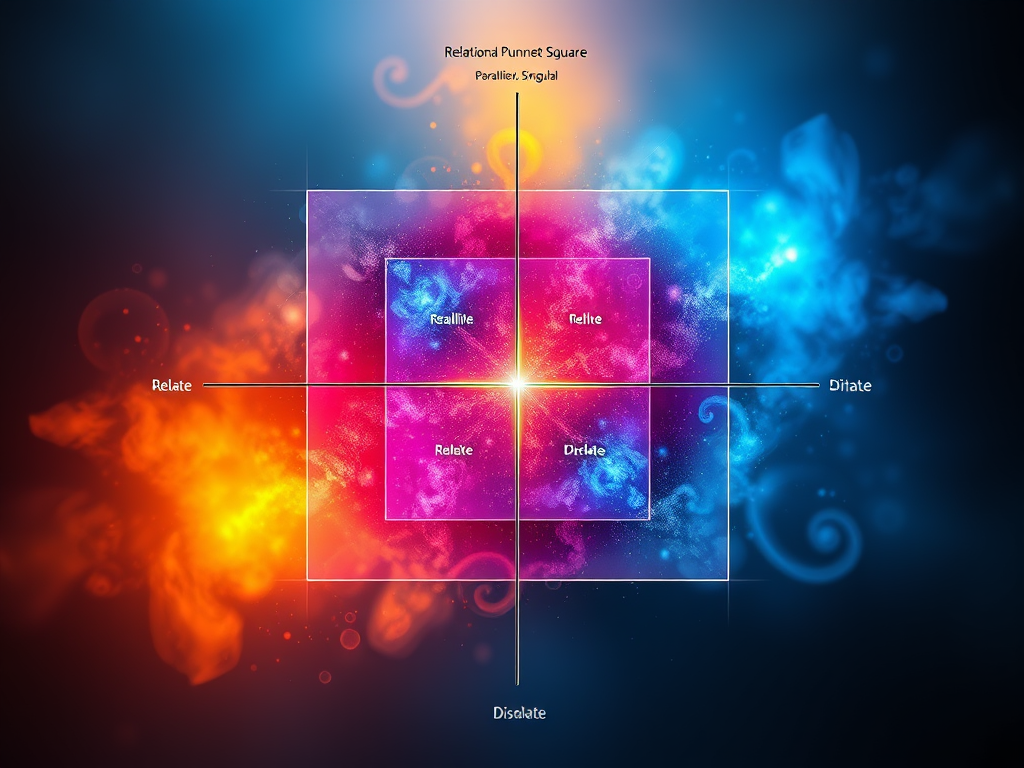
Because they’re speaking from different quadrants:
- one anchored, one unanchored
- one generative, one protective
- one relating, one disrelating
- one parallile, one singular
Without the axes, it feels like rejection or conflict.
With the axes, it’s just misalignment.
And misalignment is fixable.
Hidden axes explain why some relationships feel effortless and others feel impossible
It’s not chemistry.
It’s not fate.
It’s not “clicking.”
It’s dimensional compatibility.
When two people share:
- similar anchoring patterns
- similar tempos
- similar relational states
- compatible internal architectures
the field feels effortless.
When they don’t, the field feels heavy — even if both people care deeply.
This isn’t a failure.
It’s a coordinate mismatch.
Hidden axes explain why we misread ourselves
We collapse our own dimensional states into single‑dimension judgments:
- “I’m overwhelmed” → actually parallile overload
- “I’m shutting down” → actually protective state
- “I’m withdrawing” → actually unanchored
- “I’m losing interest” → actually disrelating structurally
- “I’m inconsistent” → actually context‑dependent architecture
Dimensional thinking gives you a way to understand yourself without shame.
Hidden axes explain why repair fails
Most repair attempts fail because they target the wrong dimension.
You can’t:
- fix unanchoring with reassurance
- fix protection with logic
- fix disrelate with intensity
- fix parallile overload with more information
- fix singular rigidity with pressure
When you know the axis, you know the repair.
When you don’t, you end up escalating the very thing you’re trying to solve.
The moment you start looking for axes, the world becomes legible
You stop asking:
- “Why is this happening?”
and start asking: - “Which dimension is active?”
You stop assuming:
- malice
- rejection
- failure
- abandonment
- incompatibility
and start seeing:
- structure
- state
- bandwidth
- architecture
- coordinates
This is the shift from confusion to clarity.
From shame to understanding.
From reaction to navigation.
Next up:
How the shift from “why” to “where” changes the entire way we understand relational life.

























 Survivor Literacy
What do you think?