
Relational Field Theory
Toward a Unified Relational Topology
When you start seeing relationships dimensionally, something profound happens.
The world stops looking like a series of isolated events and starts looking like a field — a structured, multi‑dimensional space where people, groups, and systems move.
This is the beginning of a unified relational topology.
Not a metaphor.
Not a vibe.
Not a personality test.
A map.
A way of understanding human interaction that is:
- structural
- predictable
- navigable
- measurable
- repairable
And once you see it, you can’t unsee it.
A topology is a shape — and relational life has a shape
Most people think relationships are chaotic.
Unpredictable.
Emotional.
Personal.
Random.
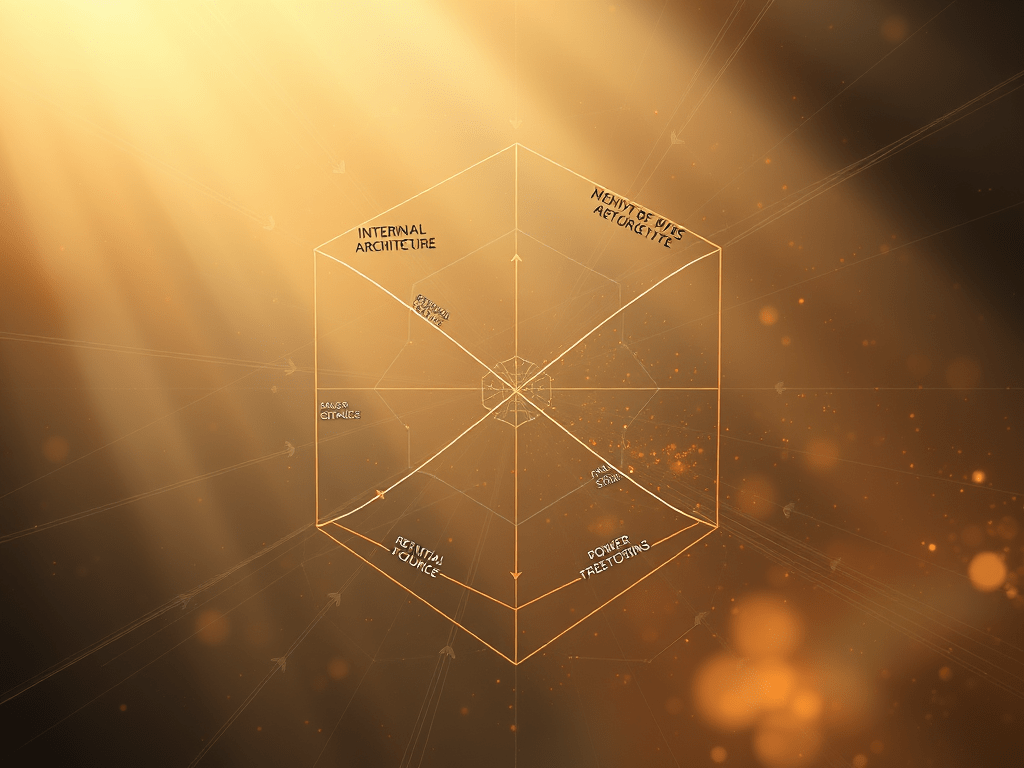
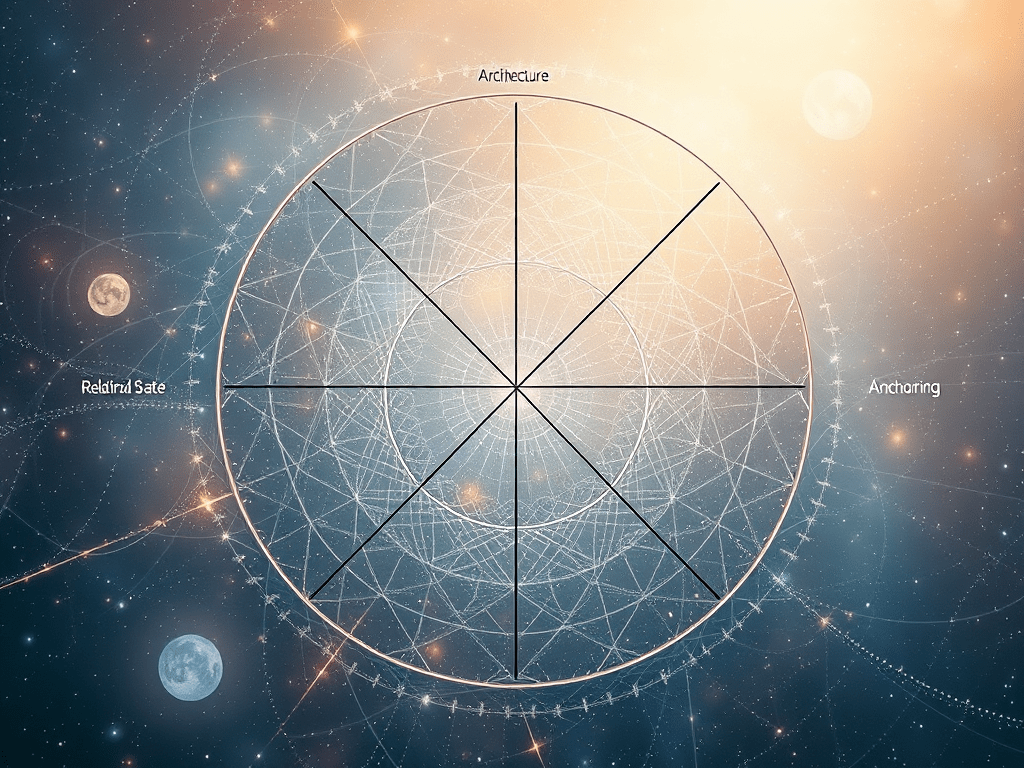
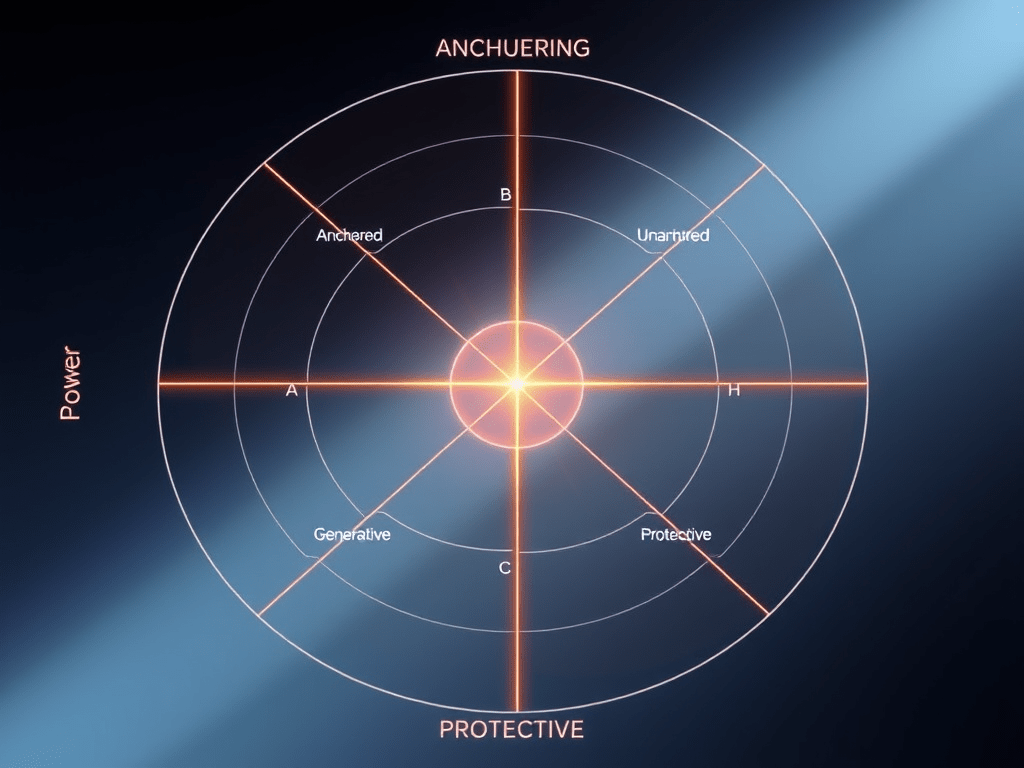
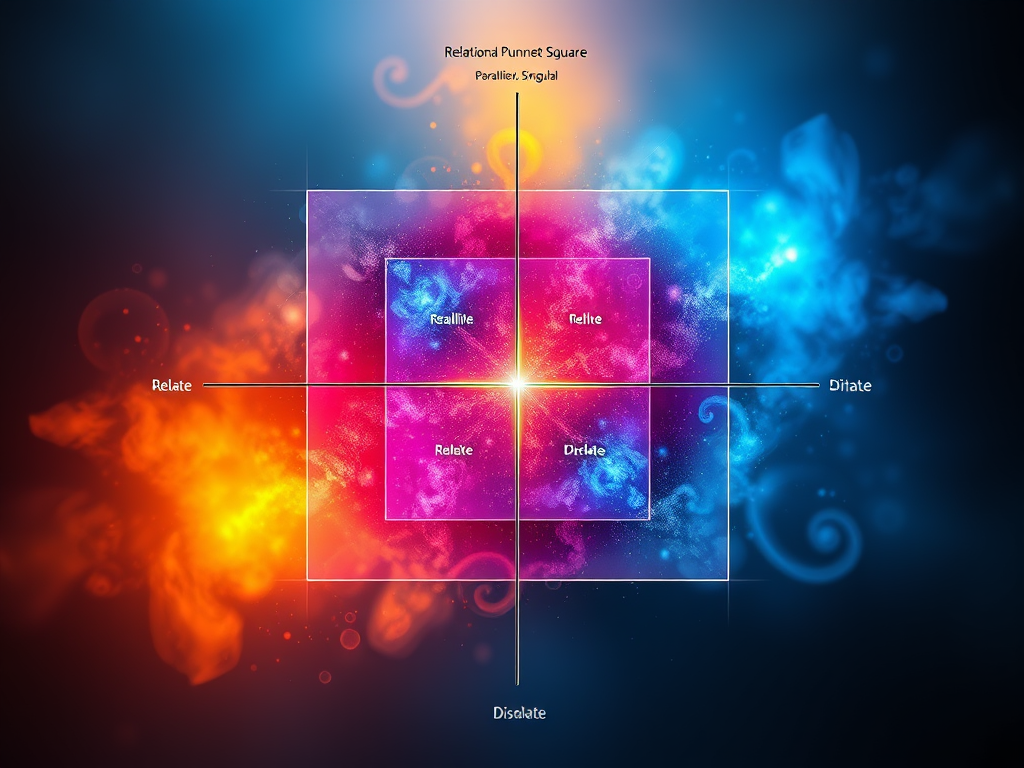
But when you map the four axes of the relational hypercube:
- Internal Architecture
- Relational State
- Anchoring
- Power Source
you start to see that relational life has a geometry.
People don’t behave randomly.
They behave according to where they are in the field.
This is the shift from:
- stories → coordinates
- blame → structure
- confusion → clarity
- reaction → navigation
Topology replaces narrative.
A unified topology means everything can be mapped using the same principles
Once you understand the axes, you can map:
Individuals
Their internal architecture, their relational bandwidth, their protective patterns.
Dyads
How two people meet, misfire, cohere, or collapse.
Groups
How coherence forms, fragments, or stabilizes.
Institutions
How systems anchor, protect, disrelate, or overload.
Communities
How fields generate belonging or lose it.
Creative collaborations
How multi‑node coherence emerges or dissolves.
AI systems
How they anchor, relate, protect, or collapse under complexity.
The same axes apply everywhere.
That’s what makes it a topology.
A unified topology reveals the difference between structure and story
Most relational suffering comes from confusing:
- structural states
with - personal narratives
For example:
- “They withdrew” → actually unanchored
- “I failed” → actually overload
- “They don’t care” → actually protective
- “I’m inconsistent” → actually context‑dependent architecture
- “We’re incompatible” → actually mismatched quadrants
Topology dissolves the story and reveals the structure underneath.
And structure is fixable.
A unified topology gives us a shared language
When everyone can name the axes, you get:
- cleaner communication
- faster repair
- less projection
- less guilt
- less shame
- more agency
- more coherence
Instead of:
- “Why are you like this?”
you get: - “Where are you in the field?”
Instead of:
- “You’re withdrawing.”
you get: - “Are you unanchored or protective right now?”
Instead of:
- “This isn’t working.”
you get: - “We’re in incompatible quadrants — let’s adjust.”
Shared language creates shared reality.
A unified topology makes relational life navigable
This is the real breakthrough.
Once you understand the axes, you can:
- predict collapse
- anticipate coherence
- diagnose misattunement
- choose the right repair pathway
- design relational spaces intentionally
- build communities that don’t fragment
- create collaborations that don’t collapse
- understand yourself without shame
- understand others without blame
You stop reacting to the field.
You start navigating it.
A unified topology is the beginning of relational literacy
Just like we teach:
- emotional literacy
- financial literacy
- digital literacy
we can teach relational literacy — the ability to understand and navigate the multi‑dimensional field of human interaction.
This is what the relational hypercube makes possible.
Not just insight.
Not just clarity.
Not just relief.
A new way of seeing.
A new way of relating.
A new way of building the worlds we want to live in.
























 Survivor Literacy
What do you think?