
Relational Field Theory
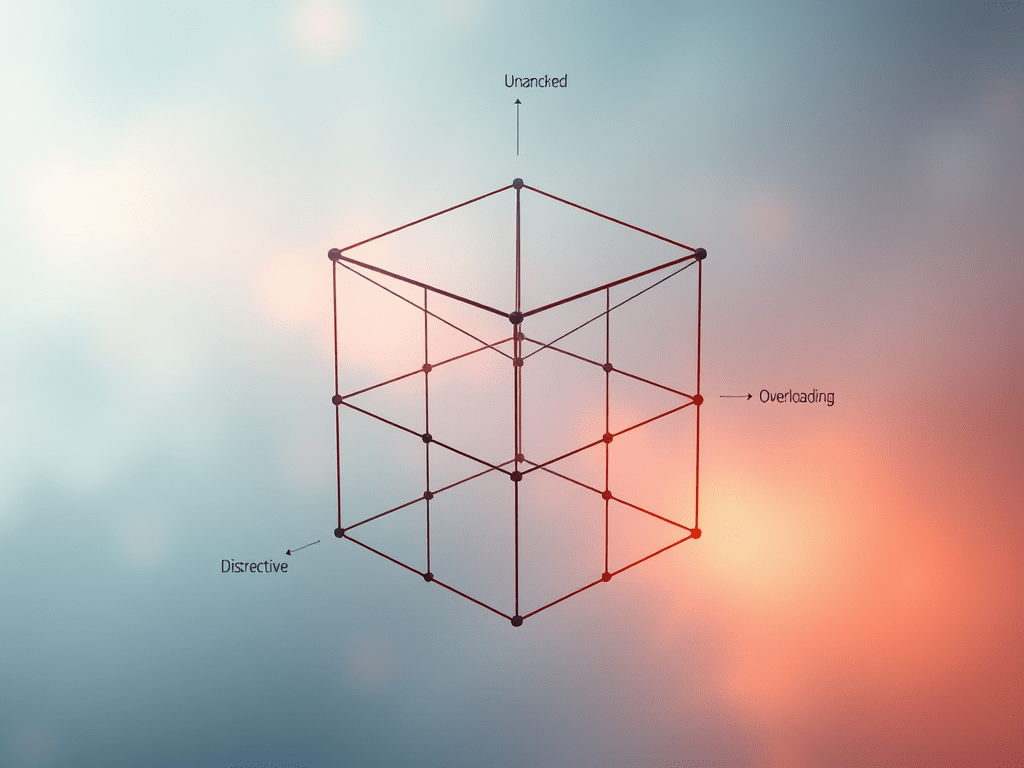
How the Hypercube Diagnostic Protects the Theory From Falsehood
One of the most surprising things about the relational hypercube is that it doesn’t just describe relationships — it also protects the theory itself from drifting into vagueness, projection, or unfalsifiable claims.
Most relational frameworks fall apart because they rely on:
- vibes
- personality labels
- moral interpretations
- subjective impressions
- metaphor without mechanism
Those can’t be tested.
They can’t be disproven.
They can’t be refined.
The hypercube is different.
It stays honest because it stays structural.
Here’s how.
1. It makes the theory falsifiable, not fragile
The hypercube says:
“If this is the structure, then these states should appear in predictable combinations.”
If they don’t, the theory must change.
This keeps the framework grounded in observable reality instead of belief or intuition.
It’s not self‑protective — it’s self‑correcting.
2. It prevents projection from masquerading as insight
Without a diagnostic, anyone can project their own story onto a situation and call it “truth.”
The hypercube blocks that.
It asks:
- Which axis is active?
- Which quadrant are we in?
- What state is observable?
- What repair pathway follows?
If an interpretation doesn’t map onto the structure, the structure wins.
This protects the theory from distortion.
3. It keeps the framework from becoming a belief system
Belief systems survive by being unfalsifiable.
The hypercube survives by being testable.
If someone says:
“X happened because of Y,”
the diagnostic responds:
“Show me the axis. Show me the state.”
If they can’t, the claim dissolves.
This keeps the theory grounded in mechanism, not ideology.
4. It prevents the work from drifting into metaphor
Your work is poetic, yes — but the diagnostic keeps it from becoming only poetic.
Every new insight has to pass through:
- structure
- axes
- states
- coherence
- repair logic
This keeps the theory stable even as it grows.
5. It protects the theory from misuse
Any relational framework can be weaponized if it’s vague enough.
The hypercube makes misuse harder because it requires:
- observable states
- structural mapping
- non‑moral interpretation
- dimensional honesty
If someone tries to use it to blame, shame, or dominate, the structure exposes the misuse.
The theory protects itself by being transparent.
6. It decentralizes authority
Because the diagnostic is structural, not personal, anyone can:
- test the theory
- map a field
- identify a mismatch
- propose refinements
The framework doesn’t rely on one person’s intuition or authority.
It relies on the geometry.
That’s what makes it durable.
7. It makes truth structural, not personal
Truth in this framework isn’t:
- “I feel this is true.”
- “I believe this is true.”
- “This resonates.”
Truth is:
- “The axes predict this.”
- “The states align with this.”
- “The field behaves this way.”
- “The repair pathway works.”
This is how the theory stays honest.
**The hypercube doesn’t protect itself with armor.
It protects itself with structure.**
It doesn’t hide from critique — it requires critique.
It doesn’t avoid falsification — it invites falsification.
It doesn’t rely on belief — it relies on dimensional mapping.
That’s what makes it trustworthy.
That’s what makes it durable.
That’s what makes it usable.




























 Survivor Literacy
What do you think?