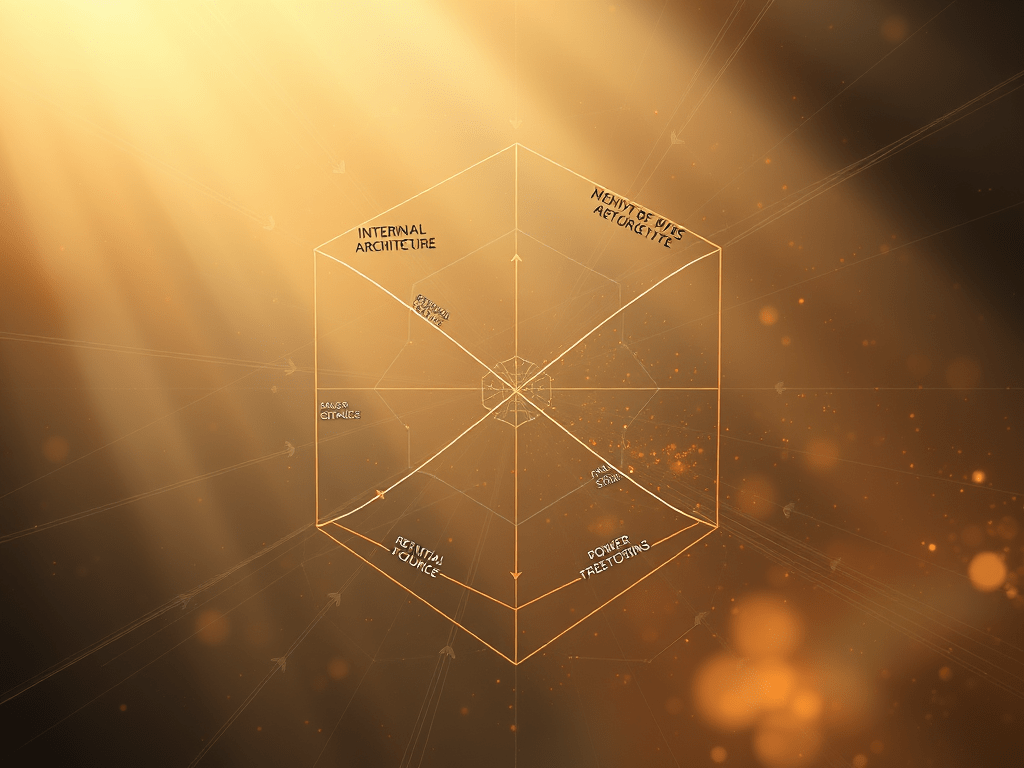
Relational Field Theory
How Dimensional Mapping Gives Us Predictive Power in Relationships
Most people think relationships are unpredictable.
Someone withdraws, someone gets overwhelmed, someone shuts down, someone suddenly opens up — and we’re left trying to interpret the behavior after the fact.
But once you understand relationships as dimensional, not linear, something remarkable happens:
You stop reacting to behavior and start predicting it.
Not in a manipulative way.
Not in a controlling way.
In a map‑based way.
When you know the axes, you can anticipate how a person or system will behave long before the behavior appears.
Here’s how.
1. Each axis has predictable states
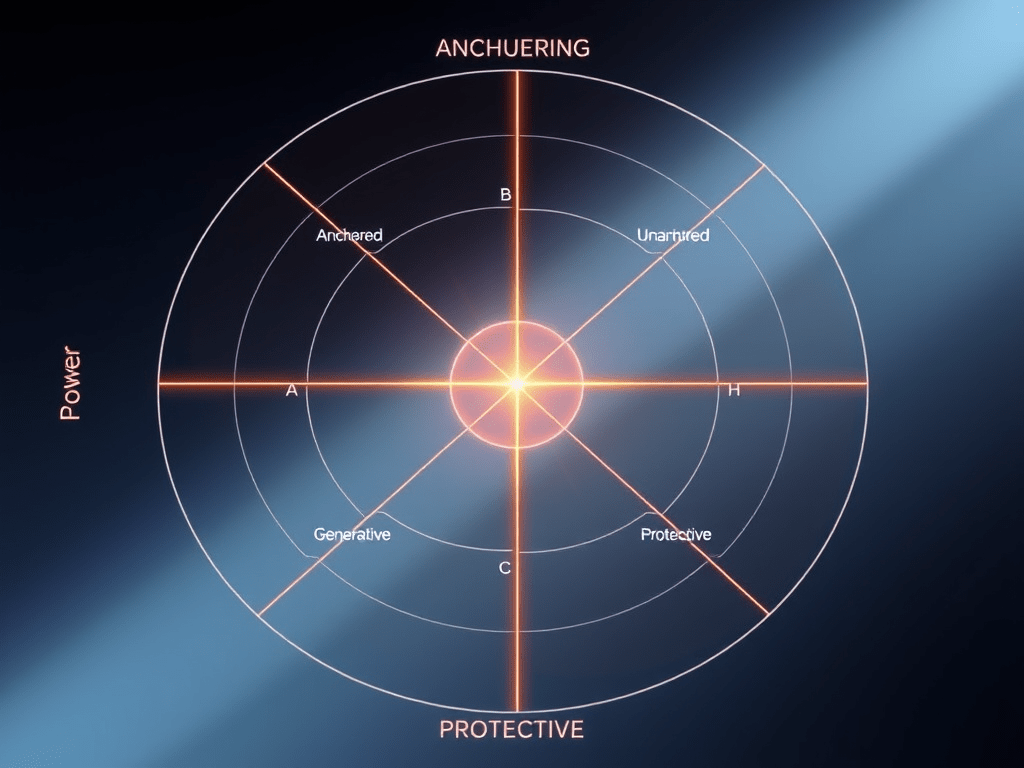
The relational hypercube is built from four independent axes:
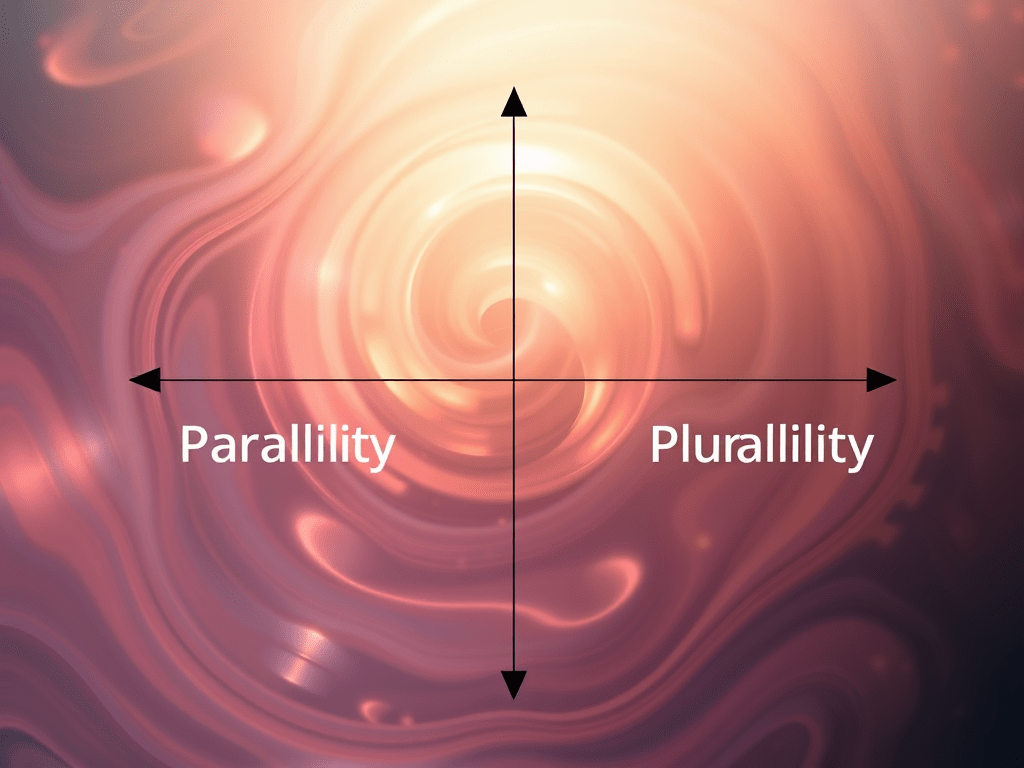
- Internal Architecture (Parallile ↔ Singular)
- Relational State (Relate ↔ Disrelate)
- Anchoring (Anchored ↔ Unanchored)
- Power Source (Generative ↔ Protective)
Each axis has its own logic.
Each axis has its own triggers.
Each axis has its own predictable transitions.
When you know the axes, you can see the trajectory of a relational moment before it unfolds.
2. You can predict collapse before it happens
Collapse rarely comes out of nowhere.
It comes from a specific combination of coordinates:
- unanchored
- protective
- disrelating
- overloaded (parallile) or rigid (singular)
When you see these states forming, you know collapse is imminent — not because someone is “failing,” but because the field is moving toward a predictable quadrant.
This lets you intervene early:
- anchor the field
- reduce complexity
- restore safety
- slow the tempo
Suddenly collapse isn’t a surprise.
It’s a solvable equation.
3. You can predict coherence before it appears
Coherence also has a signature:
- anchored
- generative
- relating
- regulated (parallile) or steady (singular)
When these states align, the field becomes capable of:
- mutual shaping
- resonance
- shared agency
- multi‑node coherence
You can feel it coming.
You can prepare for it.
You can amplify it.
This is how great collaborations, friendships, and communities form — not by accident, but by alignment.
4. You can predict misattunement without blaming anyone
Misattunement isn’t mysterious.
It’s dimensional.
It happens when two people occupy incompatible quadrants:
- one anchored, one unanchored
- one generative, one protective
- one relating, one disrelating
- one parallile, one singular
When you see the mismatch, you stop taking it personally.
You stop assuming malice or rejection.
You stop trying to fix the wrong thing.
You can adjust the field instead of blaming the people.
5. You can predict which repair pathway will work
Each axis has its own repair mechanism:
- Anchoring repairs unanchored states
- Safety repairs protective states
- Attunement repairs disrelate states
- Regulation repairs parallile overload
- Flexibility repairs singular rigidity
When you know the axis, you know the repair.
This is the beginning of precision relational repair — the ability to intervene exactly where the field needs support.
6. You can predict your own patterns with clarity instead of shame
Dimensional mapping doesn’t just help you understand others.
It helps you understand yourself.
You can see:
- when you’re about to collapse
- when you’re about to overextend
- when you’re about to protect
- when you’re about to unanchor
- when you’re about to disrelate
This isn’t self‑criticism.
It’s self‑navigation.
You’re not guessing anymore.
You’re reading your own coordinates.
7. You can predict the behavior of groups, not just individuals
This is where the hypercube becomes powerful.
Groups have:
- internal architecture
- relational states
- anchoring patterns
- power sources
Once you know how to read these axes, you can predict:
- when a team will fragment
- when a community will cohere
- when a collaboration will thrive
- when an institution will collapse
This is relational physics at scale.
Dimensional mapping doesn’t make relationships perfect.
It makes them legible.
And once something is legible, it becomes navigable.
Next up:
How dimensional thinking dissolves guilt and shame by reframing misattunement as a coordinate mismatch, not a personal failure.


























 Survivor Literacy
What do you think?