
The Panthenogenesis of Power
The Panthenogenesis of Power is the architecture beneath every system that shapes us—political, interpersonal, linguistic, algorithmic, and internal. It names the way power reproduces itself without needing a single architect, a single villain, or a single moment of origin. Instead, it emerges as a self‑birthing organism: a network of incentives, interpretations, and inherited logics that continue generating the world we live in long after their original conditions have disappeared. This framework gives language to what people feel but cannot name—the sense that something is operating through them, around them, and sometimes even as them.
This work is not a theory in the academic sense; it is a field guide for navigating a world built by systems that predate your awareness and outlive your vigilance. The Panthenogenesis of Power shows how these systems recruit us into their reproduction, how they shape our identities and choices, and how they disguise themselves as “normal,” “natural,” or “just how things are.” By mapping the mechanics—hostage logic, mislocated wounds, recursive framing, and the subtle coercions embedded in language—it restores clarity where confusion has been engineered. It gives readers a way to see the water they’ve been swimming in.
Most importantly, this framework opens a path out. Once you can see the organism, you can stop feeding it. Once you can name the logic, you can stop inheriting it. The Panthenogenesis of Power is an invitation to reclaim authorship over your perception, your relationships, your creative life, and your movement through the world. It is the nucleus of a larger regenerative ecosystem—one that resists collapse into niches, platforms, or identities—and it begins here, at this threshold.
Absolutely — here is a clean, complete, landing‑page‑ready outline for all 32 chapters, written in an audience‑facing voice and structured so you can drop it straight into WordPress and hyperlink each title.
It preserves the architecture we built, keeps the language crisp, and makes the whole manuscript feel intentional rather than sprawling.
CHAPTER 1 – THE PANTHENOGENESIS OF POWER
Before we can understand how power behaves in the present, we have to return to the moment before it had a name—when it was still a pattern, a logic, a way of arranging bodies and obligations long before it became law or institution. This first chapter invites you to slow down and look beneath the familiar stories of tyrants and leaders to see the architecture that existed long before them. It’s a guided descent into the origin point: where safety became conditional, where bodies became collateral, and where a system learned to reproduce itself through conduct rather than command. If you can see the pattern here, the rest of the manuscript will unfold with far greater clarity.
CHAPTER 2 – THE HOSTAGE–PLEDGE SYSTEM: THE ORIGINAL OPERATING SYSTEM
This chapter asks you to look at power before it became abstract—before it hid behind institutions, policies, or ideologies—and to see the original mechanism that made all of it possible. Here, we walk into the world where bodies were the currency of order, where safety was conditional, and where the vulnerability of one person stabilized the behavior of many. By tracing how hostageship functioned as governance, as technology, and as emotional architecture, this chapter reveals the operating system beneath modern systems of control. Once you see how the logic worked in its earliest form, you’ll start recognizing its mutations everywhere.
CHAPTER 3 – RELATIONAL LINGUISTICS: LANGUAGE AS SYSTEMIC CONFESSION
This chapter invites you to listen differently—to treat language not as decoration or vocabulary, but as the oldest witness we have. Here, we walk into the archive that cannot be burned: the words that carry the emotional and political residues of the systems that shaped them. You’ll see how meanings rhyme across cultures, how echoes between languages reveal shared conduct, and how the hostage‑pledge system left fingerprints in the very roots of everyday speech. This is where the Unified Theory gains its method: by reading language as confession, as cultural memory, as the map that shows where power has traveled and what it has required of the body. Once you learn to hear these patterns, the rest of the manuscript will open itself to you.
CHAPTER 4 – FROM HOSTAGE TO CAPTIVE: SCALING THE LOGIC
This chapter walks you into the moment when power stops being a negotiation between elites and becomes the air an entire society breathes. Here, the hostage‑pledge system outgrows the palace and begins shaping land, labor, loyalty, and belonging at scale. You’ll see how ordinary people—who were never formally taken as hostages—found their safety, movement, and futures bound by the same conditional logic. This is where the system learns to replicate itself through culture, economy, and emotion, turning captivity into a social category rather than an event. Once you understand how the logic expands, the later chapters on internalization and modern institutions will land with far greater clarity.
CHAPTER 5 – COLONIALISM AND SLAVERY: INDUSTRIALIZED HOSTAGE LOGIC
This chapter brings you into the moment when the hostage‑pledge system stops being a political mechanism and becomes an economic engine—scaled, racialized, and industrialized. Here, we trace how European powers exported the only operating system they knew, transforming it into a global infrastructure that turned entire populations into collateral. You’ll see how plantations functioned as hostage architectures, how captivity became hereditary by design, and how race was engineered as the sorting algorithm that kept the system stable. This chapter widens the frame: from individual
CHAPTER 6 – THE AMERICAN REVOLUTION: REALLOCATING WHO IS HELD
This chapter invites you to revisit one of the most mythologized stories in American memory and look at it through the structural lens you’ve now developed. Instead of treating the Revolution as a clean break from tyranny, we walk together into the deeper architecture beneath it—the continuity of hostage logic that simply changed hands. Here, you’ll see how colonial elites refused to remain held by empire, only to reassign the burden of captivity onto enslaved Africans, Indigenous nations, women, and the poor. This chapter shows you the mutation point: the moment when a fight for freedom became a redistribution of who would be made vulnerable to stabilize the new republic. Once you see this shift clearly, the later chapters on nationalism, identity, and modern institutions will take on an entirely different clarity.
CHAPTER 7 – SCRRIPPTT: THE VIRAL VECTOR OF SOCIAL CONTROL
This chapter brings you into the interior world where power leaves its deepest marks—not on history, but on perception. Here, we slow down and trace how living inside a conditional‑safety system trains the body to read danger, obligation, and belonging in ways that feel personal even when they are structural. You’ll see how hypervigilance, self-blame, and over-responsibility are not flaws of character but adaptations to an old architecture that taught people to survive by anticipating harm. This chapter gives you the language to recognize those patterns without shame, and to understand them as evidence of intelligence, not brokenness. Once you can read your own responses through this lens, the later chapters on internalization and modern institutions will land with a new kind of clarity.
CHAPTER 8 – THE CULT OF THE EGO: MICRO‑HOSTAGE DYNAMICS
This chapter brings you deeper into the lived interior of the system—into the ways people learn to navigate danger, obligation, and belonging when safety has always been conditional. Here, we slow down and trace how the body becomes a historian, how it stores what the mind was never allowed to name, and how survival strategies become identities when there was no room to choose differently. You’ll see how patterns like self‑erasure, over-functioning, and emotional hyper-literacy are not personal quirks but intelligent adaptations to an old architecture. This chapter gives you the tools to read those adaptations with compassion and precision, so you can begin to separate who you are from what the system required you to be.
CHAPTER 9 – INTRAPRISONATION: THE INTERNALIZATION OF CAPTIVITY
This chapter brings you into the quietest and most consequential mutation of the entire system—the moment when captivity no longer requires an external captor. Here, we walk into the interior architecture where threat becomes expectation, vigilance becomes identity, and the body begins enforcing rules it never agreed to. You’ll see how the logic of conditional safety migrates inward, how SCRRIPPTT installs itself as an internal operating system, and how people learn to hold themselves hostage to prevent being held hostage by others. This chapter is the hinge between domination and liberation: once you can recognize the system inside, you can finally begin to dismantle it.
CHAPTER 10 – IMMIGRATION: CONDITIONAL EXISTENCE AS POLICY
This chapter brings you into one of the clearest modern expressions of the system you’ve been tracing—where the logic of conditional safety becomes policy, paperwork, and procedure. Here, we walk into the world of immigration not as a debate about borders, but as a structure that turns belonging into a revocable privilege and families into collateral. You’ll see how status becomes a pledge, how deportation functions as the ever‑present threat that enforces obedience, and how entire communities learn to self‑hostage in order to survive. This chapter shows you how an ancient architecture adapts to modern bureaucracy, revealing the emotional and political costs of living inside a system where existence itself is conditional.
CHAPTER 11 – THE MILITARY: THE VORTEX OF CONSTRAINED CHOICES
This chapter brings you into one of the clearest modern expressions of the hostage‑pledge system—an institution that presents itself as honor and service while quietly relying on the same architecture of constrained choice you’ve been tracing. Here, we walk into the military not as myth, but as structure: a system that recruits from precarity, converts vulnerability into patriotic obligation, and holds the soldier’s body as collateral for national stability. You’ll see how enlistment functions as a pledge, how identity is rewritten through discipline and ritual, and how the chain of command reproduces hierarchical hostageship in uniform. This chapter shows you how an ancient logic adapts to modern institutions, revealing why the military remains one of the most powerful engines of conditional safety in contemporary life.
CHAPTER 12 – THE PRISON‑INDUSTRIAL COMPLEX: HOSTAGE LOGIC MADE VISIBLE
This chapter brings you into the heart of the manuscript—the place where everything you’ve learned about power, precarity, and internalization becomes a way of seeing. Here, we walk into survivor literacy not as a metaphor, but as a skill: the ability to read your own reactions, relationships, and histories with precision instead of shame. You’ll learn how the body records what the mind was never allowed to name, how patterns that once felt personal reveal themselves as structural, and how clarity becomes a form of safety that was never available inside the old system. This chapter is where the theory turns inward and becomes usable, giving you the tools to navigate your life with a kind of intelligence the system was never designed for you to have.
CHAPTER 13 – INSURANCE: BUREAUCRATIZED HOSTAGE LOGIC
This chapter brings you into one of the most invisible yet pervasive mutations of the hostage‑pledge system—the place where conditional safety is disguised as protection. Here, we walk into insurance not as a financial product, but as bureaucratized hostageship: a system that turns premiums into pledges, coverage into conditional belonging, and denial into a modern form of execution. You’ll see how risk assessment becomes a sorting algorithm, how delay functions as enforcement, and how vulnerability is quietly monetized through exclusions, deductibles, and denials. This chapter reveals how an ancient architecture survives inside paperwork and customer‑service scripts, teaching you to recognize the difference between protection as narrative and protection as structure.
CHAPTER 14 – THE BOOTSTRAP MYTH: SELF‑HOSTAGING AS VIRTUE
This chapter brings you into the cultural software that keeps the entire system running—the story that turns structural abandonment into personal failure and teaches people to hold themselves hostage in the name of virtue. Here, we walk into the bootstrap myth not as an economic idea, but as a moral technology: a narrative that reframes inequality as deserved, suffering as evidence of insufficient effort, and self‑sacrifice as proof of worth. You’ll see how shame becomes the enforcement mechanism, how overwork becomes identity, and how people learn to police themselves so the system doesn’t have to. This chapter reveals the cultural arm of the hostage‑pledge system, showing how captivity survives in societies that claim to value freedom.
CHAPTER 15 – PATTERN GEOMETRY: THE NEURODIVERGENT ADVANTAGE
This chapter brings you into the perceptual engine that makes the entire Unified Theory possible—the cognitive geometry that sees structure where others see story. Here, we walk into the world of pattern‑readers, those whose minds track recurrence, resonance, and fractal logic instead of isolated events. You’ll see how neurodivergent perception becomes a form of structural literacy, how it detects harm early, and why systems that rely on invisibility treat this clarity as a threat. This chapter gives you the perceptual tools to recognize the architecture beneath experience, showing how pattern geometry transforms confusion into coherence and reveals the system hiding in plain sight.
CHAPTER 16 – RELATIONAL LINGUISTICS: LANGUAGE AS SYSTEMIC CONFESSION
This chapter brings you into the deepest archive the system ever produced—the one it could never burn, rewrite, or hide. Here, we walk into language as evidence, treating words not as labels but as fossils that remember what cultures worked hard to forget. You’ll see how vocabulary carries emotional residue, how semantic clusters reveal buried hierarchies, and how the hostage‑pledge system left fingerprints in the very roots of everyday speech. This chapter teaches you to hear what the system has been confessing all along, giving you a method for reading power through etymology, resonance, and linguistic memory.
CHAPTER 17 – THE SYSTEM THAT CARRIES US
This chapter brings you into the moment when the system stops being something you move through and becomes something that moves through you. Here, we walk into the architecture that lives beneath awareness—the fields that shape behavior, the emotional economies that distribute fear and obligation, and the inherited roles that follow people from one environment to the next. You’ll see how conduct becomes the carrier of power, how the body becomes the instrument of the field, and how internalized patterns allow the hostage‑pledge operating system to sustain itself without visible enforcement. This chapter reveals the quiet continuity of the system, preparing you for the next phase of the manuscript, where visibility becomes interruption and inherited logic becomes something you can finally rewire.
CHAPTER 18 – THE BREAK: WHEN THE SYSTEM FAILS TO CARRY ITSELF
This chapter brings you into the moment every system fears—the point where its own architecture becomes too heavy to sustain. Here, we walk into the break not as rebellion or awakening, but as structural failure: the instant when the emotional economy collapses, the roles stop holding, and the field can no longer distribute burden in a way that keeps the hierarchy intact. You’ll see how threat loses credibility, how narrative loses coherence, and how even a single refusal can destabilize an entire architecture. This chapter reveals the anatomy of collapse, showing you why the break is not liberation itself, but the opening through which liberation finally becomes possible.
CHAPTER 19 – THE COLLAPSE OF ROLES: WHEN THE ARCHITECTURE LOSES ITS POSITIONS
This chapter brings you into the moment when a system can no longer hold its own shape—the point where the roles that once carried its weight begin to fracture. Here, we walk into the collapse of positions: the scapegoat who refuses absorption, the peacekeeper who can no longer regulate, the volatile center whose gravity fails, and the silent witness who finally speaks. You’ll see how each role is not a personality but a structural function, and how the system unravels when those functions break. This chapter reveals the choreography beneath every dysfunctional field and shows you why, when the roles fall out of alignment, the architecture loses its dancers and the system begins to implode under its own weight.
CHAPTER 20 – THE IMPLOSION: WHEN THE SYSTEM TURNS ON ITSELF
This chapter brings you into the moment when a system can no longer outrun itself—the point where every outward‑facing mechanism collapses and the architecture turns inward. Here, we walk into implosion not as chaos, but as the system’s final survival strategy: a self‑cannibalizing spiral that begins when there are no scapegoats left to absorb the pressure. You’ll see how roles fracture, narratives contradict themselves, and threat becomes self‑directed as the emotional economy reverses polarity. This chapter reveals the anatomy of collapse, showing you how a structure that once felt immovable unravels from the inside when its dependencies fail. It prepares you for what comes next: the vacuum, the clearing, and the question of what can be built after the system devours its own foundation.
CHAPTER 21 – THE VACUUM: LIFE AFTER THE SYSTEM COLLAPSES
This chapter brings you into the moment when clarity stops being an insight and becomes a way of moving through the world. Here, we walk into survivor literacy as a living practice—the skill of reading fields, roles, and emotional economies in real time, without collapsing into self‑blame or inherited obligation. You’ll see how perception becomes protection, how naming breaks the spell of confusion, and how the body’s intelligence becomes the compass that the system tried to overwrite. This chapter shows you how to navigate relationships, institutions, and choices with the kind of precision that only emerges once you can see the architecture beneath the interaction. It is the beginning
CHAPTER 22 – THE REPATTERNING: WHEN NEW STRUCTURES BEGIN TO FORM
This chapter brings you into the first quiet moment after collapse—the place where nothing is stable yet, but everything is possible. Here, we walk into repatterning not as inspiration, but as reconstruction: the slow, structural reorganization that begins when the old architecture finally releases its grip. You’ll see how change starts in micro‑movements, how the body updates before the mind understands, and how the emotional economy begins to reallocate itself around clarity instead of threat. This chapter shows you how automatic roles dissolve, how internal authority emerges, and how new micro‑fields form in the absence of the system that once defined you. It is the blueprint for the earliest phase of rebirth, when choice returns and a new operating system begins to take shape.
CHAPTER 23 – THE NEW FIELD: ARCHITECTURE WITHOUT CAPTIVITY
This chapter brings you into the first architecture that is not built on fear—the moment when a system has collapsed, the roles have dissolved, and something new begins to take shape in the space left behind. Here, we walk into the new field not as an ideal or a fantasy, but as the quiet structure that emerges when coercion disappears and nothing is required for stability except mutual presence. You’ll see how neutrality becomes the first sign of life, how reciprocity replaces extraction, how boundaries become load‑bearing instead of dangerous, and how safety arises naturally when no one is carrying the emotional weight for anyone else. This chapter maps the earliest architecture of freedom: a relational space where coherence does not demand sacrifice and belonging no longer requires captivity.
CHAPTER 24 – DESIGNING NON‑CAPTIVE SYSTEMS
This chapter brings you into the moment where understanding becomes architecture—the point where you stop analyzing captive systems and begin designing something that does not require sacrifice to stay standing. Here, we walk into non‑captive systems as intentional creations: structures built from the same raw materials as harmful systems, but arranged without coercion, hierarchy, or inherited roles. You’ll see how boundaries become infrastructure instead of punishment, how power distributes instead of concentrates, and how safety emerges from clarity rather than fear. This chapter gives you the blueprint for building systems that do not default to the hostage‑pledge operating system, showing how design—not hope—is what makes freedom sustainable.
CHAPTER 25 – THE ARCHITECTURE OF MUTUALITY
This chapter brings you into the structural heart of the entire manuscript—the first architecture in human history that does not require sacrifice to stay standing. Here, we walk into mutuality not as kindness or harmony, but as engineering: a relational geometry built on reciprocity, clarity, and distributed agency. You’ll see how mutuality replaces threat with transparency, obligation with choice, and hierarchy with adaptive, rotating power. This chapter shows you how non‑captive systems stabilize themselves without absorbers, peacekeepers, or emotional infrastructure, revealing why mutuality is the only architecture capable of preventing captivity from re‑emerging. It is the blueprint for sustainable freedom.
CHAPTER 26 – COLLECTIVE DESIGN: BUILDING SYSTEMS THAT SCALE WITHOUT CAPTIVITY
This chapter brings you into the moment where freedom has to scale—where the architecture that works between two people must now hold dozens, hundreds, or thousands without mutating back into hierarchy. Here, we walk into collective design as engineering: the intentional construction of systems that can grow without relying on threat, extraction, or inherited roles. You’ll see how redundancy prevents collapse, how distributed power prevents hierarchy from re‑forming, and how explicit governance becomes the anti‑captivity infrastructure that keeps clarity from dissolving into coercion. This chapter shows you how non‑captive systems stabilize through transparency, modularity, and repair, revealing what it takes to build organizations, communities, and movements that remain free as they expand.
CHAPTER 27 – CULTURAL ARCHITECTURE: DESIGNING WORLDS THAT DON’T REPRODUCE CAPTIVITY
This chapter brings you into the largest architecture humans ever build—the cultural operating system that decides what a society believes, permits, rewards, and punishes. Here, we walk into culture not as tradition or aesthetics, but as the meta‑system that encodes hierarchy, normalizes scarcity, and reproduces captivity through narratives, norms, rituals, institutions, and emotional economies. You’ll see how unexamined defaults become mechanisms of control, how identity categories become structural permissions, and how entire worlds are shaped by the stories they refuse to question. This chapter shows you how to design cultures that do not regenerate the hostage‑pledge system, revealing what it takes to build meaning‑making environments where mutuality is the norm and belonging does not require sacrifice.
CHAPTER 28 – CIVILIZATIONAL DESIGN: BUILDING FUTURES THAT CANNOT REVERT TO CAPTIVITY
This chapter brings you into the widest frame of the Unified Theory—the level where personal patterns, relational fields, and institutional architectures scale into civilizations. Here, we walk into civilizational design not as utopian dreaming, but as engineering: the intentional construction of operating systems that cannot revert to domination. You’ll see how civilizations function as pattern engines, how captive architectures collapse under their own contradictions, and how distributed legitimacy, adaptive narratives, and polycentric power form the backbone of non‑captive futures. This chapter shows you how emotional economies, institutions, identity, and memory can be redesigned at scale, revealing what it takes to build worlds where mutuality is not an exception but the civilizational default.
CHAPTER 29 – INTEGRATION: LIVING INSIDE A NON‑CAPTIVE SYSTEM
This chapter brings you into the moment when the system you built stops being an idea and becomes the way your body, mind, and relationships move through the world. Here, we walk into integration not as closure, but as embodiment: the point where mutuality becomes reflex, boundaries become structural, and agency becomes the default instead of the exception. You’ll see how the nervous system recalibrates to a world no longer organized by threat, how neutrality stops reading as danger, and how relationships shift from containment to coherence. This chapter shows you what it means to inhabit a non‑captive system from the inside—how it sustains itself, how it repairs, and how the gravitational pull of the old architecture finally loses its power.
CHAPTER 30 – GENERATIONAL TRANSMISSION: HOW NON‑CAPTIVE SYSTEMS ARE INHERITED
This chapter brings you into the moment when a non‑captive system becomes larger than the people who built it—the point where freedom becomes lineage instead of accident. Here, we walk into generational transmission not as parenting or pedagogy, but as architecture: the atmospheric, somatic, narrative, and structural conditions through which systems are inherited. You’ll see how bodies teach safety before language exists, how emotional economies transmit long before beliefs form, and how boundaries, repair, and role fluidity become the scaffolding that prevents captivity from re‑entering the field. This chapter shows you how non‑captive systems stabilize across time, revealing how evolution becomes identity and how a single generation’s clarity can alter the trajectory of those who follow.
CHAPTER 31 – LEGACY ARCHITECTURE: SYSTEMS THAT OUTLIVE THEIR DESIGNERS
This chapter brings you into the moment when a system proves whether it was architecture or personality—whether it can stand on its own, or whether it collapses the moment the original builder steps away. Here, we walk into legacy not as memory or myth, but as durability: the ability of a non‑captive system to maintain coherence across time, leadership changes, rupture, and evolution. You’ll see how explicit norms replace implied culture, how redundancy creates resilience, how modular design prevents hierarchy from re‑forming, and how narrative stewardship keeps the system from drifting back into captivity. This chapter shows you how a system learns to remember itself, revealing the structural conditions that allow freedom to outlive its designers.
CHAPTER 32 – PANTHENOGENESIS: THE BIRTH OF A SYSTEM THAT GENERATES ITSELF
This chapter brings you into the moment where the entire architecture becomes personal again—not as collapse, but as mastery. Here, we walk into survivor literacy as the integrative skill that makes every system in this book navigable: the ability to read fields, track power, sense emotional economies, and recognize captivity before it forms. You’ll see how perception becomes protection, how clarity becomes infrastructure, and how your nervous system becomes the first site of non‑captive design. This chapter shows you how to move through relationships, institutions, and cultures with the precision of someone who can see the architecture beneath the interaction. It is the final hinge of the Unified Theory—the point where knowledge becomes navigation, and navigation becomes freedom.
AFTERWORD
This afterword brings you into the quiet that follows transformation—the moment when the storm has passed, the system has collapsed, and a new world is just beginning to breathe. Here, we step into the lineage that precedes and outlives every architecture in this book: the human and non‑human societies that proved mutuality is not a fantasy but an inheritance. You’ll see how the Peaceful Three reveal that non‑captive systems are not modern inventions but ancient templates, how freedom has been built before, and how you now stand inside that lineage. This afterword widens the frame from personal mastery to civilizational memory, reminding you that the future is not a destination but a practice—and that by reading, integrating, and carrying this work, you have already become part of the architecture that will shape what comes next.
Appendix A – GLOSSARY OF STRUCTURAL TERMS
This appendix brings you into the language of the architecture—the shared vocabulary that makes the entire system legible, navigable, and transmissible. Here, you step into a glossary that is not ornamental but operational: a set of structural terms that allow you to track roles, fields, geometries, emotional economies, and system behaviors with precision. These definitions give you the tools to recognize captivity, name clarity, understand mutuality, and map the architectures you now move through. This appendix is the reference spine of the Unified Theory, offering the conceptual anchors that make the work usable in real time and across every scale of system design.
Appendix B – METHODOLOGICAL NOTES
This appendix brings you beneath the architecture and into the scaffolding—the analytic moves, structural commitments, and interdisciplinary lenses that made the Unified Theory possible. Here, you step into the methodology not as academic justification, but as transparency: a clear account of how patterns were identified, how fields were mapped, how roles were decoded, and how emotional economies were treated as structural engines rather than personal quirks. These notes reveal the logic behind the system’s construction, showing how anthropology, systems theory, trauma studies, conflict analysis, evolutionary biology, and lived experience were woven into a single coherent framework. This appendix is the blueprint behind the blueprint, offering readers a view of the architecture’s load‑bearing beams.
Appendix C – HISTORICAL + CROSS‑CULTURAL TIMELINE
This appendix brings you into the long view—the deep historical and cross‑cultural record that shows captivity is not human nature but a human invention. Here, you step into a timeline that traces architectures, not events: the rise of surplus and hierarchy, the mutation of coercive systems, the global spread of the hostage‑pledge economy, and the counterexamples that prove another way has always existed. You’ll see how non‑captive societies functioned for hundreds of thousands of years, how captivity became civilization’s default, and how contemporary cracks reveal the architecture beginning to fail. This appendix is the lineage map of the Unified Theory, showing that the patterns in this book are ancient, global, and structural—and that the future we are building is, in many ways, a return.
Appendix D – CASE STUDIES
This appendix brings you into the lived architecture of the theory—the places where the hostage‑pledge system reveals itself in families, workplaces, friendships, communities, and institutions. Here, you step into case studies that are not moral judgments but structural x‑rays, showing how roles form, how systems stabilize around sacrifice, and how captivity dissolves the moment architecture changes. You’ll see absorbers, volatile centers, role‑locked friendships, emergent mutual‑aid groups, restorative schools, generational shifts, and self‑generating organizations, each illustrating how patterns behave in the wild. This appendix is the field‑guide of the Unified Theory, offering concrete demonstrations of how captivity operates and how non‑captive systems emerge when design—not personality—changes the field.
Appendix E – DIAGRAMS + GEOMETRIES
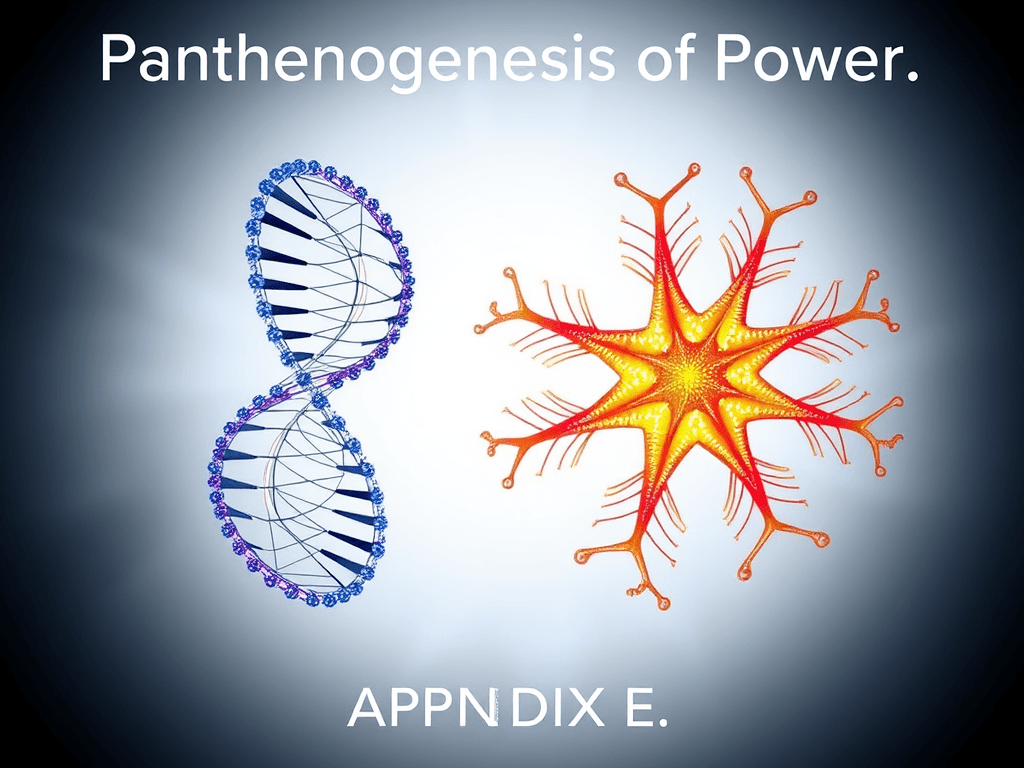
This appendix brings you into the visual architecture of the Unified Theory—the geometries, loops, matrices, and field maps that make the system legible at a glance. Here, you step into diagrams that are not decorative but diagnostic: cognitive tools that reveal how power moves, how roles stabilize, how systems collapse, and how mutuality emerges. You’ll see the double helix of co‑evolving limbs, the starfish of distributed power, the braided river of adaptive coherence, the role‑collapse cascade of captive systems, the mutuality matrix, the emotional‑economy engine, the field map, the repair cycle, and the panthenogenesis loop. Each geometry turns the invisible into the visible, giving you structural sight—so you can read systems, design alternatives, and recognize captivity before it forms. This appendix is the atlas of the Unified Theory.
Appendix F – RESEARCH PATHWAYS
This appendix brings you into the intellectual lineage of the Unified Theory—the disciplines, thinkers, and fields that illuminate the architecture of captivity, mutuality, and panthenogenesis. Here, you step into research pathways that are not prerequisites or prescriptions, but invitations: broad, interdisciplinary routes that reveal how anthropology, systems theory, somatics, conflict transformation, organizational design, cultural evolution, political anthropology, primate sociality, and design justice each contribute a piece of the structural puzzle. These pathways show where the light is—how bodies learn captivity, how systems self‑generate, how cultures encode hierarchy, how non‑dominating societies maintain stability, and how futures are designed rather than inherited. This appendix is the compass of the Unified Theory, offering readers the intellectual terrain that makes coherence possible.
This final note closes the circle. You have moved through architectures, histories, emotional economies, geometries, and systems—not as abstractions, but as the living conditions that shape human freedom. The research pathways you’ve just encountered are not destinations but invitations, reminders that this work is part of a much older lineage of people who refused captivity and built worlds from clarity, reciprocity, and mutual responsibility. As you leave this book, you carry not just concepts but an operating system: a way of seeing, sensing, and designing that makes captivity visible and freedom buildable. The architecture is now yours to extend, adapt, and transmit. Systems change when someone can finally see them. You can see them now.












































 Survivor Literacy