Here is the story of how I became who I am, and why the work on this site exists at all. This is the terrain I had to cross to understand captivity, power, trauma, and repair. It is the soil from which every limb of this field grew.
You do not need to read it all. You can move the way a braided river moves — following what calls to you, skipping what doesn’t, circling back when you’re ready.
This is not a linear story. It wasn’t a linear life.
Below is a map of the major terrains. Each one holds a different part of the truth.
THE RELATIONAL ENGINEERING PLAYBOOK A Practical Manual for Designing, Building, and Sustaining Coherent Relational Systems INTRODUCTION Relational Engineering is the… Read more: THE RELATIONAL ENGINEERING PLAYBOOK
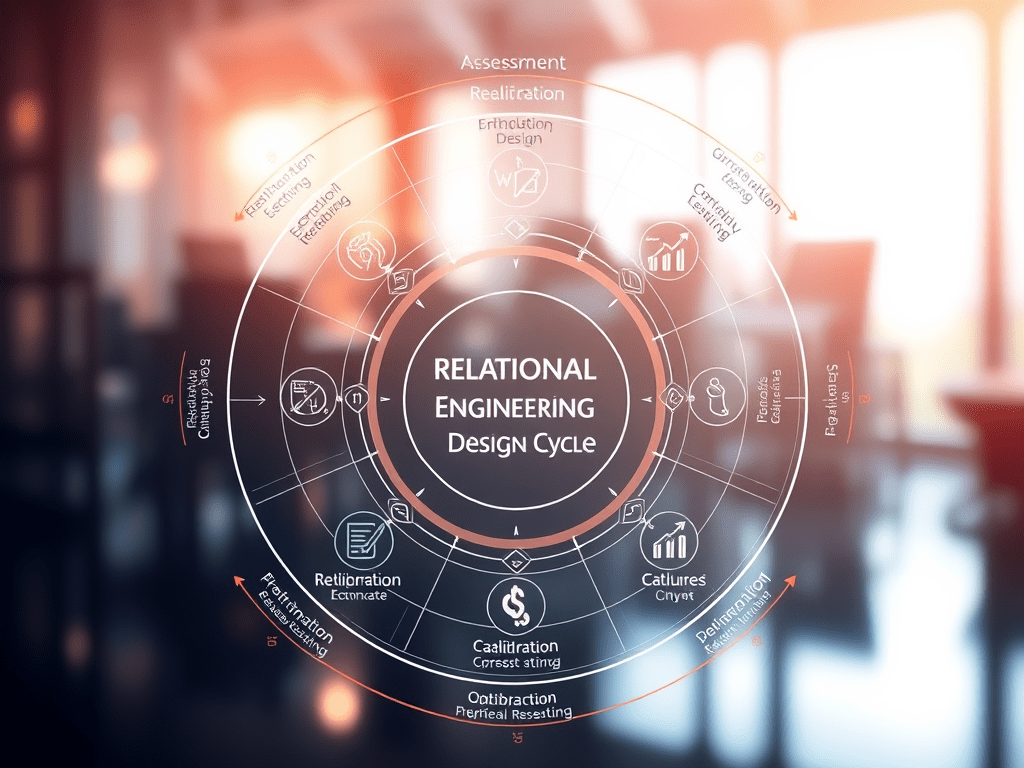
The Relational Engineering Design Cycle consists of eight stages—Assessment, Design, Construction, Calibration, Stress Testing, Optimization, Maintenance, and Evolution—essential for crafting effective relational systems. This recursive and fractal process mirrors biological and ecological patterns, ensuring relational systems adapt and thrive through continuous reflection and refinement.
The Relational Engineering Compendium outlines the discipline of Relational Engineering, which involves the design, construction, and optimization of relational systems. It addresses various sub-disciplines focusing on load balancing, energy flow, metabolic efficiency, network architecture, identity, ecological fit, and safety. The work emphasizes creating resilient and sustainable relational systems.
This chapter explores Relational Engineering and Relational Virology. It outlines how to design resilient relational systems and identifies the risks of relational viruses that exploit weaknesses within these systems. Together, these concepts provide a comprehensive framework for understanding the construction, operation, and vulnerabilities of relational systems in various contexts.
The narrator shares experiences working during haying season for a local rancher, feeling eager yet anxious to prove their worth. They navigate challenges with tractors, bond with a mostly established crew, and yearn for acceptance. The job brings personal growth and reflection, contrasting their past family ties with newfound independence.
The author uses the documentary “God Forbid” to explore the manipulative dynamics of The Cult of the Ego, focusing on Giancarlo’s experiences with Rev. Jerry Falwell Jr. and the evangelical elite. It highlights how power and moral status are exploited to control young men, masking corruption while waging moral campaigns against perceived societal threats. More importantly, it provides a history of moral politics in this country, that has influenced all of us.
The post reflects on personal experiences of childhood trauma and healing, highlighting the significance of supportive relationships, like a caring teacher during difficult times, and memorable family trips. It addresses themes of grief, resilience, and the challenges of navigating societal expectations while coping with loss and navigating adolescence.
This appendix outlines interdisciplinary research pathways related to the non-dominant structures of society, emphasizing the importance of understanding concepts like non-domination, systems theory, trauma, and organizational design. It invites readers to explore these themes to envision alternative systems beyond captivity and foster resilience and mutuality in cultures.
The Unified Theory of the Panthenogenesis of Power outlines key diagrams representing structural maps of power dynamics and relational systems. These models illustrate concepts like mutuality, stability, and emotional economies, providing insights into adaptive systems. They serve as cognitive tools for diagnosing and designing healthier relational architectures in various contexts.
The case studies illustrate how captive systems in families, workplaces, friendships, communities, schools, and organizations can be restructured to promote healthier dynamics. By identifying and addressing underlying patterns of emotional labor, hierarchical roles, and conflict management, these systems can transform into non-captive, self-generating environments that foster mutuality, growth, and sustainability.
The timeline illustrates the evolution of power structures from egalitarian societies to hierarchical systems marked by captivity. It outlines how captivity has transformed through historical eras, emphasizing that while it has become deeply embedded in civilization, it is not inherent or unavoidable. This insight suggests the potential for dismantling and redesigning oppressive systems.
The appendix outlines the methodology behind the Unified Theory of the Panthenogenesis of Power, emphasizing an interdisciplinary approach that prioritizes structural analysis over individual psychology. It focuses on the relational environment created by various systems, identifies patterns across domains, and explores concepts like emotional economies, role analysis, and repair, ultimately illustrating the theory’s practical and analytical significance.
The glossary outlines key terms related to the Unified Theory of the Panthenogenesis of Power, emphasizing concepts such as adaptive architecture, emotional economy, non-captive systems, and collective repair. It provides definitions that clarify roles, structures, and principles essential for understanding innovative organizational dynamics and fostering healthy relational environments.











































 Survivor Literacy